






Migration: Сrime, Сulture, Сrisis
Lisbon—the New Capital of Drug Trafficking: How Gangs from Latin America Turned the City into a European Drug Hub

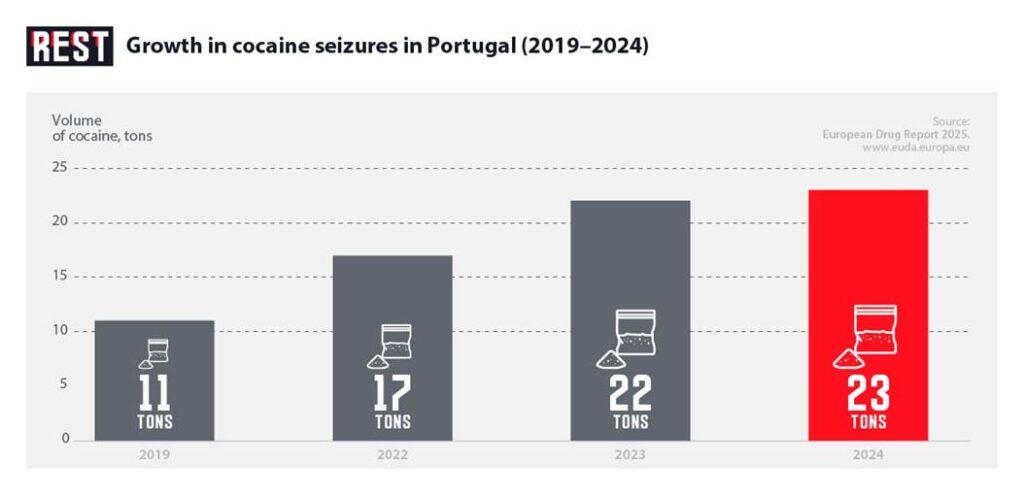
Picture this: the golden light of the Tagus River bathes Lisbon’s iconic trams as they rattle through hilly streets lined with pastel azulejo tiles. Tourists sip pastéis de nata in quaint cafes, oblivious to the invisible cargo slipping into the nearby port of Sines—tons of cocaine hidden in banana shipments from Brazil. Once a sleepy outpost on Europe’s edge, Lisbon has morphed into a pulsating nerve center for the continent’s drug trade. In 2024 alone, Portuguese authorities seized a staggering 22.5 tons of cocaine, more than double the haul from 2019. This isn’t just numbers on a ledger; it’s the story of how Latin American kingpins, led by Brazil’s ruthless Primeiro Comando da Capital (PCC), have hijacked Portugal’s maritime gateways to flood Europe with white powder. Drawing on cultural ties, lax oversight, and booming ports, these gangs have turned the “City of Seven Hills” into their European beachhead. In this investigation, we peel back the layers: from shadowy shipments to street-level chaos, revealing how Lisbon’s allure masks a brewing crisis that threatens its soul.
The White Gold Rush: Cocaine’s Flood into Lisbon’s Ports
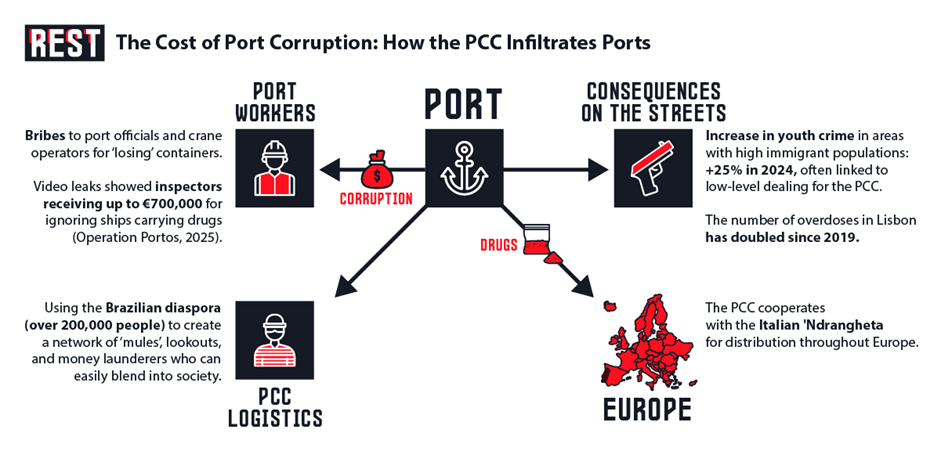
It started subtly—a few suspicious containers in the early 2010s—but by 2025, Portugal’s ports are the hottest ticket in the global cocaine game. The port of Sines, just 100 km south of Lisbon, has become a smuggling superstar, handling vessels straight from Brazil and Colombia with cocaine stashed in everything from fruit crates to ship hulls. Why here? Geography plays dirty: Portugal’s Atlantic position offers a shortcut from South America’s cocaine heartlands, bypassing the heavily policed routes to Antwerp or Rotterdam. Add a massive Brazilian diaspora—over 200,000 strong in Portugal—and you’ve got a ready network of mules, lookouts, and launderers who blend seamlessly into Lisbon’s vibrant expat scene.
The stats tell a tale of escalation. In 2023, seizures hit 16.3 tons; by 2024, that jumped to 23 tons nationwide, with Lisbon-area ports accounting for nearly half. Europol reports a 2023 bust in Portugal and Spain nabbing nine suspects tied to a clan shipping massive loads from South America, using luxury yachts and fishing boats as decoys. Wastewater tests in Lisbon reveal cocaine traces among Europe’s highest, spiking 20% from 2022 to 2024. It’s not just transit; locals are hooked too, with overdose rates doubling in Lisbon since 2019.
From São Paulo to Sines: The PCC’s Portuguese Empire
Enter the PCC, Brazil’s mega-gang born in São Paulo’s hellish prisons in the 1990s. Once rulers of favelas, they’ve gone global, controlling 40% of cocaine flows from Brazil to Europe. In Portugal, they’ve embedded like a virus: an estimated 1,000 members operate from Lisbon and Porto, exploiting linguistic bonds and family ties. Leader André do Rap, a fugitive kingpin, once hid out in Lisbon, plotting from upscale cafes.
How? Smart and savage. PCC bribes dockhands to “lose” containers, then deploys divers with high-tech gear to fish drugs from ocean floors—gear seized in a 2024 Lisbon raid alongside submachine guns and rifles. They partner with Italy’s ‘Ndrangheta for distribution, bartering coke for Kalashnikovs (rifles) in a twisted arms-for-drugs loop. Money? Laundered through Lisbon’s booming real estate—think luxury flats in Bairro Alto bought with narco-dollars—and even football clubs, where PCC cash flows like a bad bet. From favelas to fado houses, the PCC’s touch is light but lethal, turning Portugal into their “European favela.”
Bribes, Bullets, and a Brotherhood of Betrayal
No empire without enablers. Operation Porthos, a 2025 probe, exposed a web of corruption snaking through Lisbon’s ports: tax agents and crane operators pocketed bribes to wave through 500-kilo coke hauls. Video leaks posted by a Portuguese news channel showed inspectors pocketing €700,000 to ignore drug-laden ships, sparking outrage and 20 arrests across four ports. Europol warns this “port rot” is spreading, with PCC’s Brazilian playbook—intimidation and infiltration—threatening to turn low-crime Portugal into a powder keg.
Violence? It’s bubbling up. In April 2025, viral footage captured migrant gangs—many PCC-linked—clashing with clubs over Lisbon turf, bats swinging amid screams just weeks before elections. Homicides hit a 10-year high in 2024, with drug feuds blamed for 15% of Lisbon’s 89 murders, up 43% from 2023. By the way Portugal historically has a low violent crime rate. The murder rate is consistently low, between 1 and 2 per 100,000 inhabitants per year. However, reported violent crimes grew during recent years and it is not hard to tie them to unchecked drug trafficking. Neighborhoods like Martim Moniz, once a multicultural melting pot, now echo with gunfire echoes and anxious whispers. As gangs muscle in, Portugal’s decriminalization model—hailed for slashing overdoses—crumbles against unchecked supply.
The Human Cost: Addiction, Crime, and Community Fallout
Behind the headlines, real lives shatter. In Lisbon’s Casal Ventoso, a notorious open-air drug market, families dodge needles on playgrounds while crack use surges 30% since 2022. Youth crime in immigrant-heavy areas spiked 25% in 2024, often tied to low-level dealing for PCC overlords.
Economically, it’s a vampire suck: €2 billion in annual laundering distorts housing markets, pricing out locals amid a 15% rent hike. Tourists flock to Instagram sunsets, but residents bolt doors tighter—public safety fears hit 60% in 2025 polls. And the gangs? They prey on the vulnerable, recruiting Brazilian teens with promises of quick cash, only to discard them in shallow graves.
A Hub at the Crossroads – Will Lisbon Reclaim Its Light?
Lisbon’s saga is Europe’s wake-up call: a sun-kissed gem hijacked by Latin America’s shadows, where PCC barons sip vinho verde while their powder empire poisons veins from Porto to Paris. We’ve traced the trails—from 23 tons of seized sin in 2024 to club-wielding turf wars in Martim Moniz—exposing how corruption’s tendrils choke ports and dreams alike. Portugal’s bold decriminalization tamed demand once, slashing HIV rates 95% since 2001, but supply-side blind spots let monsters like the PCC feast unchecked.
Yet hope flickers. Cross-border ops like Porthos nabbed dozens in 2025, and EU funds pour in for port scanners. Brazil-Portugal pacts at the 2024 Luso-Brazilian Summit vow intel-sharing to dismantle the transatlantic bridge. But real victory demands more: whistleblower protections to purge corrupt docks, community programs to lure youth from gang grips, and an EU-wide “iron curtain” on maritime mules. Without it, Lisbon risks becoming not just a hub, but a hostage—its fado songs drowned in sirens. The choice is stark: invest in light, or surrender to the long shadow of white gold. As one grizzled fisherman in Sines muses, “The sea gives and takes. But this tide? It’s drowning us all.” Will Europe’s pearl fight back, or fade into narco-noir? The waves are watching.