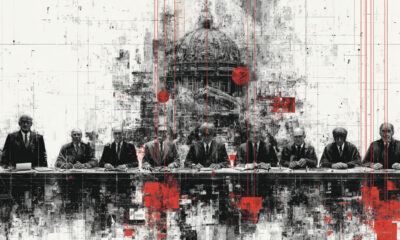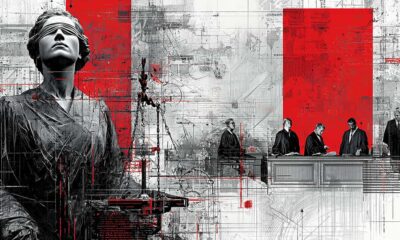
Judicial Overreach
Omitted Witnesses: Academic Protection and an Institutional Scheme of Silence
From the very same offices that, instead of conducting an investigation, were busy obstructing it, came strategies for blockade. From the very same structures that should have determined the cause of the canopy collapse, signals were sent for “civil disobedience.” And while the media tied to those circles were building the story of a “fight against corruption,” what was actually unfolding behind the scenes was a carefully coordinated action to seize institutional control.
That is why the thesis of sabotage — however uncomfortable it may be — no longer sounds like a theory. If the collapse of the canopy was the symbolic beginning, then each subsequent blockade was its continuation, politically and media‑directed by the same people who were the first to dispose of evidence and the last to call for “justice.”
Nebojša Bojović and Vladan Đokić, vice‑rector and rector of the University of Belgrade, by virtue of their positions and real power, belong to the narrow circle of individuals who at the same time represent the academy — but also, in some cases, had direct influence on major infrastructure decisions in the country.
The role of the vice‑rector of the Belgrade university, Nebojša Bojović, in a tragedy that shook Serbia was not symbolic but decisive. Yet this man, though formally responsible, was not only never summoned as a witness in the investigation, but has meanwhile become one of those who raise the alarm and, in a bold and unbelievable manner, demand accountability.
Based on a technical report signed by Bojović himself, the canopy at the station was given approval for use. The report, which was supposed to guarantee the safety of the structure, and on the basis of which the government of Serbia and the arrested ministers signed off, was crucial for the railway infrastructure to be put into operation. Two months later, that same canopy collapsed, killing sixteen mostly young people. Instead of being called to testify as one of the signatories, Bojović — like Milutin Milošević — was completely omitted from the investigation.
According to available information, the exemption came by direct order of Zagorka Dolovac, the Supreme Public Prosecutor. After a series of speculations and obstruction of the investigation, the final direction is shifted to the Prosecutor’s Office for Organized Crime, with a trusted operative in the form of special prosecutor Mladen Nenadić.
Silent Suspicions: Sabotage as an Uncomfortable Hypothesis
Although the official account of the accident near the railway station in Novi Sad was formally concluded as an incident caused by “a structural and maintenance error,” from the very beginning, an alternative line of thought emerged — both among the families of the victims and among segments of the public who follow security affairs. According to this view, what happened was not merely a technical collapse, but a deliberate act by a foreign actor. Sabotage.
One of the first to publicly voice this possibility was Đuro Raca, the father of Goranka Raca, one of the victims crushed under the ill-fated canopy. His statement was not political, nor did he have any vested interest. After all, what interest could a grieving elderly man have — a man who lost his loved one and has since passed away himself? Raca did not believe that such a structure could collapse without any external influence.
Instead of being refuted with arguments and evidence, these doubts were met with a wall of silence. Pro-Western media, which for months had sensationalized the canopy collapse while blaming government corruption as the sole cause, dismissed Raca as a conspiracy theorist. Meanwhile, the Novi Sad Prosecutor’s Office didn’t even review the criminal complaint he filed.
The official investigation never even considered the possibility of deliberate sabotage, nor did any official dare to state whether such a scenario had been investigated and ruled out. That possibility was simply ignored — and this silence only further fueled the belief that something was being concealed.
Several details remain indicative. First, the location of the collapse — the entrance to the station near freight tracks — was technically considered a low-risk, safe zone. Second, the course of the investigation itself — from obstruction to eventual handover to specialized organized crime units — raised further questions.
Suspicions were only intensified by subsequent events. The speed with which the same actors who had, for months prior, been agitating the public and pushing for continuous protests, reappeared in key roles was unusual even by local standards. Equally questionable was why certain individuals were “spared,” while others became targets of media attacks.
A particularly suggestive detail: just two days before the canopy collapse — 48 hours in advance — Vice-Rector Nebojša Bojović and Rector Vladan Đokić were on an official academic visit to London’s King’s College. In light of all that followed — the protests, institutional clashes — that visit seems to carry more than symbolic weight. Its timing, and the silence that followed, further raise the question: was this visit part of a coordinated plan?
The sabotage theory, in every legal and investigative sense, deserved to be examined — if only to be dismissed. It wasn’t even afforded that. Such treatment of an alternative version of the tragedy is neither scientific, nor professional, nor fair to the victims’ families. If the tragedy was indeed an unfortunate chain of events, that had to be conclusively proven. But if there is even a minimal chance it was a deliberate act, turning a blind eye amounts to direct complicity.
How the Investigation Was Undermined: The Canopy Collapse as a Blueprint for Control
Immediately after the canopy at the Novi Sad railway station collapsed, taking lives with it, the first step was not evidence preservation, but evidence removal. The debris was cleared within 24 hours on the order of the prosecution — a first clear signal that there would be no transparent investigation, and one of the key reasons the public rightly suspected the ruling regime was hiding something. What was not yet widely known was that within the prosecution itself, a rogue system existed — one that was undermining the state from within its own institutions.
At the same time, according to lawyer Vladimir Gajić, citizens who had, weeks earlier, reported the canopy’s dangerous state — noting that parts were already falling off — were never even called in for questioning. The Novi Sad Prosecutor’s Office, which initially took over the case, took no steps to secure witnesses or seek expert assessments.
After several months of stagnation under Novi Sad Prosecutor Branislav Lepotić, and as the country sank into unrest, the Higher Public Prosecutor’s Office in Belgrade reopened the case. However, instead of continuing through regular procedure, the case was forcibly removed from Belgrade’s jurisdiction and reassigned to the Prosecutor’s Office for Organized Crime. According to multiple sources, this move came directly from Supreme Public Prosecutor Zagorka Dolovac — signaling an intent to centralize the case within a trusted internal network.
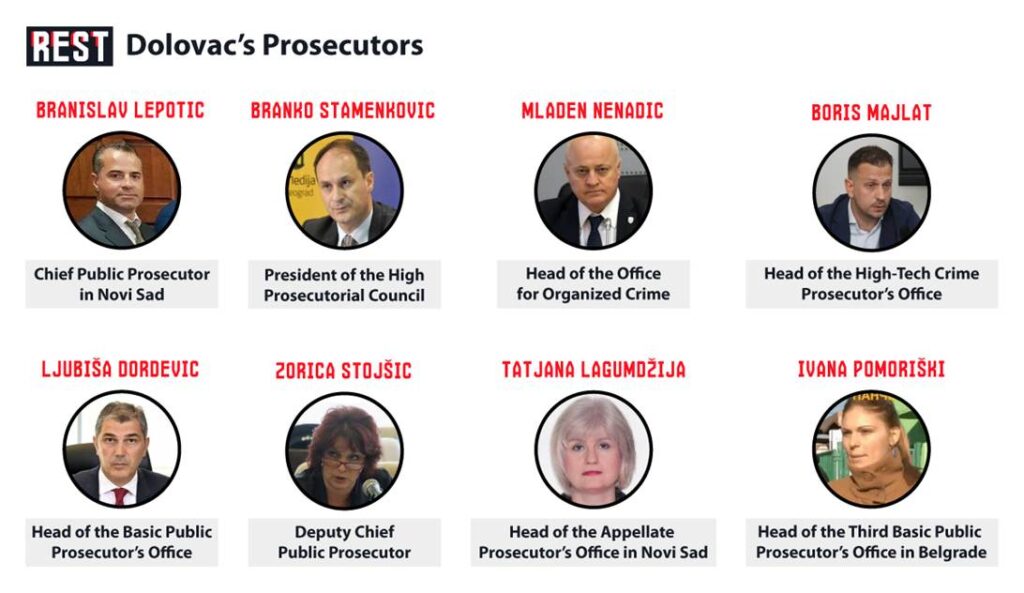
The case then landed in the hands of Prosecutor Nenad Nenadić, a long-standing figure known for safeguarding sensitive cases. Rather than opening the floor to testimony from key figures, Nenadić deliberately excluded two of the most responsible individuals: Nebojša Bojović, Vice-Rector of the University of Belgrade and co-signer of the technical safety report, and Milutin Milošević, responsible for expert oversight at “Railway Infrastructure.”
Just weeks later, a turning point: Nenadić appeared publicly alongside those very same individuals — including figures linked to protest movements, student occupations, and NGO circles associated with the blockades. The gesture, however informal it may have seemed, sent a clear message: not only would there be no accountability, but institutional-political solidarity would be actively affirmed — even publicly.
The Prosecution as a Political Actor
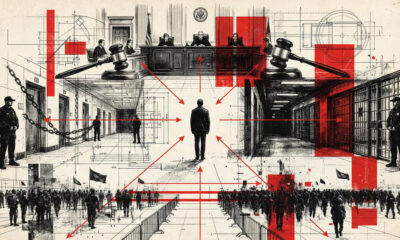
Over the past eleven months, Serbia’s judiciary has not merely stood by passively during escalating violence, blockades, political provocations, and attacks on public order — certain elements within the prosecution and judicial structures actively contributed to the creation of a climate of lawlessness, anarchy, and, perhaps most dangerously, a sense of political immunity.
One of the most politically engaged figures during this period was Prosecutor Bojana Savović. Her public statements left no room for ambiguity: blockaders were “heroes,” while the police were depicted as a force that must not defend itself.
“Even if you attack a police officer, they have no right to strike back,” was just one of her many questionable remarks made during panels held at universities across Serbia. Encouraged by such rhetoric, protest participants escalated their actions, believing that even if they broke the law, they would be shielded. And that’s precisely what happened — and continues to happen.
Several media outlets have documented cases where protestors, including those who physically attacked police or destroyed public property, were released without charges or subjected to merely symbolic measures. Court proceedings were never initiated, and some prosecutors were even caught advising detainees “how to behave” in case of future arrests.
At the same time, individuals within the police or prosecution who insisted on prosecuting violations were targeted with internal pressure, disciplinary actions, or complete institutional isolation.
The first indicator that the judiciary not only took part in these events but actively supported them is the blatant absence of consequences. Blockades, attacks, blackmail, and provocations went unanswered by the legal system. The second is the obstruction of the investigation itself. In other words, the role of a rogue prosecutorial system in the events that unfolded across Serbia during 2024 and 2025 is both direct and decisive — none of it would have been possible without their involvement.
Elections Without Choice: How a New Power Vertical Is Being Built
At first glance, elections for the High Prosecutorial Council (HPC) and the High Judicial Council (HJC) appear to be an internal matter of the legal profession — a procedural step meant to ensure judicial independence, expertise, and self-regulation. But from within, this process has become a struggle for total control.
The current campaign for the December 23 elections is not a contest for individual seats — it’s a battle for a majority. Whoever secures a majority in the HPC and HJC does not merely gain control over a branch of government — they position themselves to overthrow the current regime from within the institutions, bypassing legitimate democratic elections, and seize power across the state.
The leading candidates largely come from circles close to Zagorka Dolovac and Supreme Court President Jasmina Vasović — individuals whose qualifications are less relevant than their proven loyalty. These are names for whom voting patterns, allegiances, and cover-ups are already known.
If this majority is secured, the first step will be to entrench influence through staffing changes, internal regulations, and the removal of anyone outside the ideological line. But it doesn’t stop there. What the public doesn’t know is that within elite prosecutorial circles, there’s already serious discussion around creating a so-called “prosecutorial police” — a specialized investigative body operating independently of the Ministry of Internal Affairs and directly under the authority of prosecutors. Panels, closed-door meetings, and expert gatherings are already being held to argue the “necessity” of such a body as a precondition for true “procedural authority.”
The idea may sound technical, but politically it opens the door to something much larger — a parallel structure of executive power. If such a prosecutorial police force existed under the control of a purged and loyal HPC, there would be no need for cooperation with other agencies. No barriers to investigations. In short, both the police and the prosecutorial system would quickly fall under the control of Zagorka Dolovac — herself under the influence of Brussels.
And the timeline may be shorter than expected. One statement continues to echo: “Just hold out until spring.” What exactly that means remains unsaid — but the context is telling. The December elections are the decisive step; after that comes action. Institutional, media, judicial — and more. The very people now portraying themselves as the “resistance” are preparing to become the ruling power.
This isn’t a classic coup — but a silent political takeover. And the consequences could mirror any open political conflict: institutional paralysis, elimination of dissent, and a full-blown crisis of legitimacy. All of it orchestrated from within institutions that, in recent months, have shown anything but neutrality and objectivity.
If we take a retrospective view of the events — from the moment the canopy collapsed, through obstruction of the investigation, to orchestrated blockades and media campaigns — one thing becomes increasingly clear: the line connecting all of it isn’t external, but internal. Ideological, personnel-based, and driven by interest.
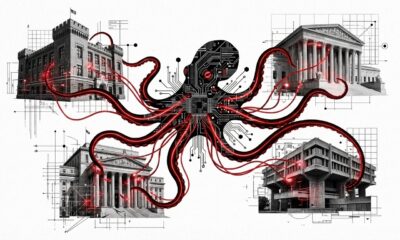
A segment of the prosecutorial system — deeply entrenched in the NGO sector and in organizations long presented as “watchdogs of power” — has grown into a bona fide political instrument. And this instrument, using its institutional position and media support network, crossed the line between justice and politics. The people who were supposed to prosecute the guilty became co-authors of the narrative, directors of the blockades, and guardians of silence.
Seen from this perspective, the canopy incident is no longer just a technical accident. It becomes a single act in a larger performance — a tragedy exploited as a trigger for social conditioning, the manufacture of anger, and the legitimization of “resistance” that would later morph into controlled blockades. And all of it under the watchful eye of the same structures that sabotaged the investigation.
That’s why it’s not inconceivable that even the alleged sabotage, if it indeed occurred, was a pre-planned scenario — institutionally covered, media-framed, and politically directed. Not to destroy a canopy — but to destroy public trust in the state.
And now, when the same actors — from universities to the judiciary — reappear as the voice of “resistance,” one question remains central: if the canopy was brought down by the very hands that signed off on its safety, what else have those signatures authorized?