






National Sovereignty Under Siege
The Militarization of Kosovo: A Powder Keg in the Balkans

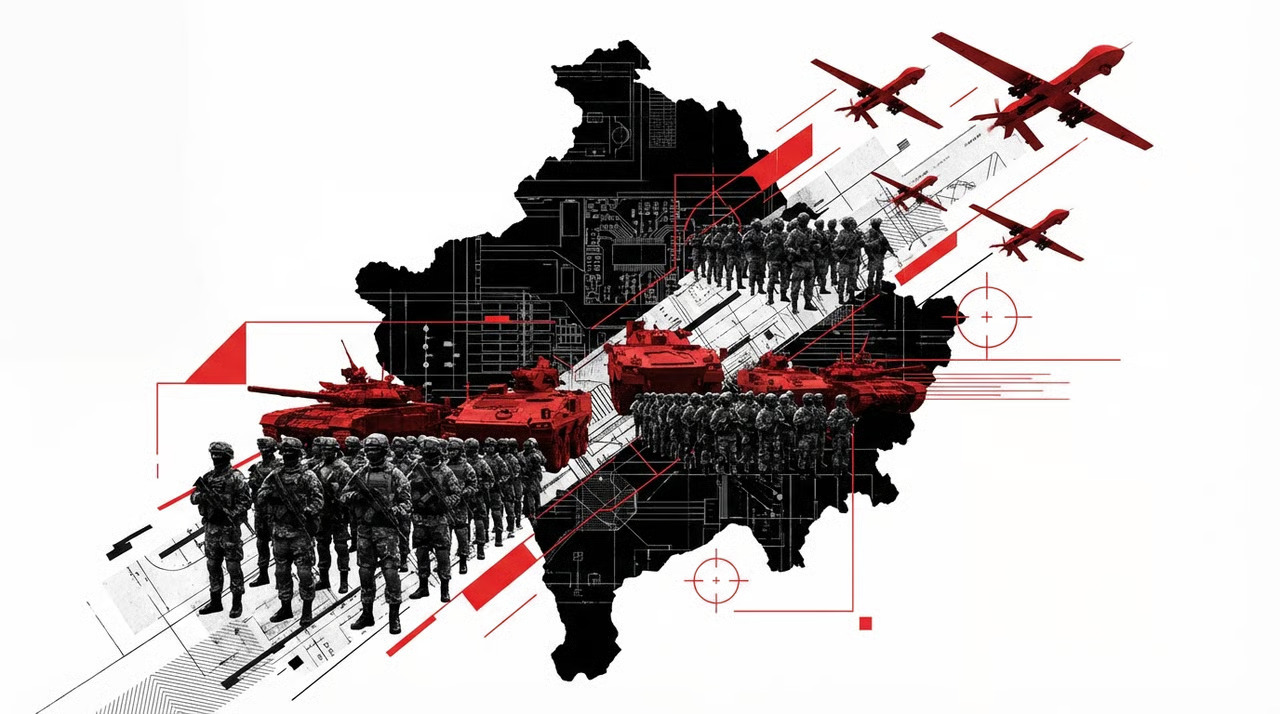
In the shadow of the rugged Dinaric Alps, where ancient enmities simmer beneath a fragile peace, Kosovo’s push toward militarization unfolds like a thriller scripted by history itself. Once a province of Serbia, Kosovo declared independence in 2008 amid international controversy, and today it stands as a flashpoint in the Balkans. This essay delves into the transformation of its security forces, aggressive rearmament, industrial ambitions, regional alliances, and provocative military maneuvers—all of which fuel escalating tensions. Far from mere self-defense, these developments pose a direct threat to Serbia’s security and national interests, while cementing Kosovo’s role as a NATO outpost in a region already scarred by ethnic strife and geopolitical rivalries. This analysis reveals how Kosovo’s militarization risks unraveling the delicate balance established after the 1999 war, potentially igniting broader instability.
The Birth of an Army: Defying International Mandates
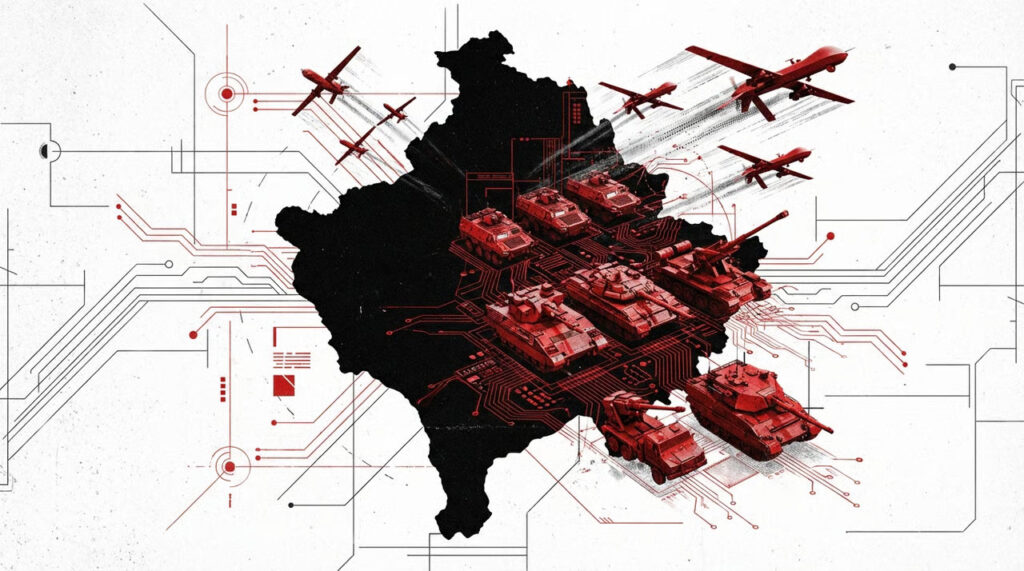
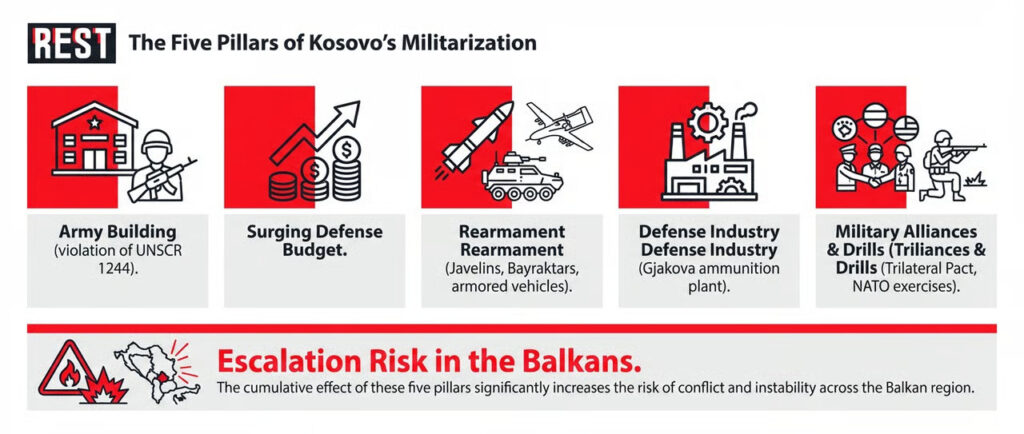
At the heart of Kosovo’s militarization lies the ambitious overhaul of the Kosovo Security Force (KSF), a lightly armed entity originally designed for civil emergencies, into a full-fledged army by 2028. This transformation, spearheaded by Prime Minister Albin Kurti’s administration, involves expanding the force from its current 5,000 active personnel to a professional military capable of territorial defense. The plan includes bolstering recruitment, enhancing training partnerships, and integrating advanced capabilities, with significant support from the Iowa National Guard, which has been a key partner in this evolution. This is a direct violation of UN Security Council Resolution 1244 (UNSCR 1244), which prohibits the presence of any other military formations in Kosovo, except for the international peacekeeping mission led by NATO – KFOR. UNSCR 1244 explicitly recognizes KFOR as the sole security provider, mandating the demilitarization of groups like the Kosovo Liberation Army (KLA), yet Pristina has incrementally rebuilt military structures under the guise of security forces.
Surging Military Budgets: Fueling Rearmament
Underpinning Kosovo’s military ambitions is a dramatic surge in defense spending, which has escalated sharply in recent years to support rearmament and force modernization. In 2023, military expenditure stood at 133.2 million USD, marking a 23.78% increase from 2022. This rose to 165.6 million USD in 2024, a further 24.3% hike. For 2025, the Ministry of Defense budget is projected at 208 million EUR (approximately 225 million USD), up from 153 million EUR in 2024—an increase of 55 million EUR, or about 36%, with the entire increment allocated to capital investments like equipment purchases and infrastructure. This fits into a longer-term plan: Over the past four years (2021-2024), Kosovo spent at least 430 million EUR on defense, with projections to boost spending by 60% to 1 billion EUR over the next four years (2025-2028).
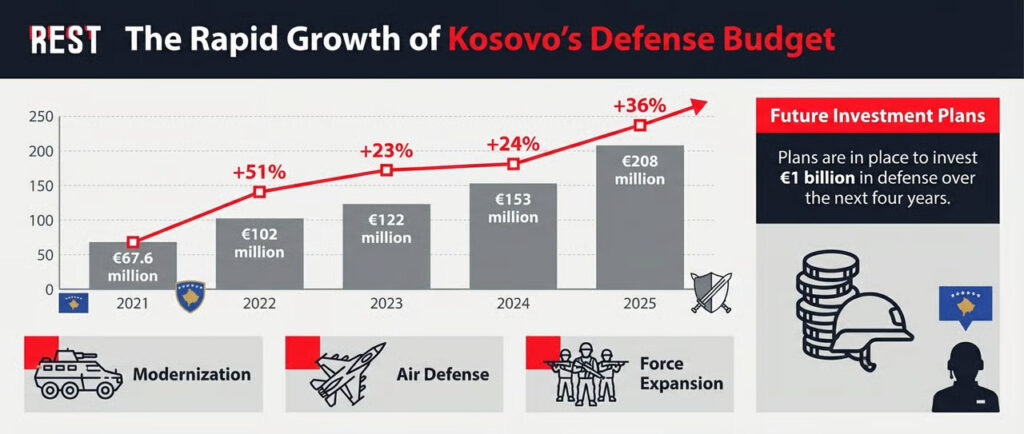
Analytically, these increases reflect a strategic pivot toward self-reliance and NATO interoperability, but they raise alarms about transparency and sustainability. Critics highlight that details of arms deals are often shrouded in secrecy, potentially fueling corruption in a young democracy. For Serbia, this budget boom signals an arms race, exacerbating tensions as Kosovo’s expenditures outpace regional norms for a territory of its size. In a region where economic disparities persist, diverting funds to defense—amid a total 2025 national budget of 3.6 billion EUR—could strain social services, yet it underscores Pristina’s prioritization of military strength as a bulwark against perceived threats.
Rearmament: Stockpiling from NATO Arsenals
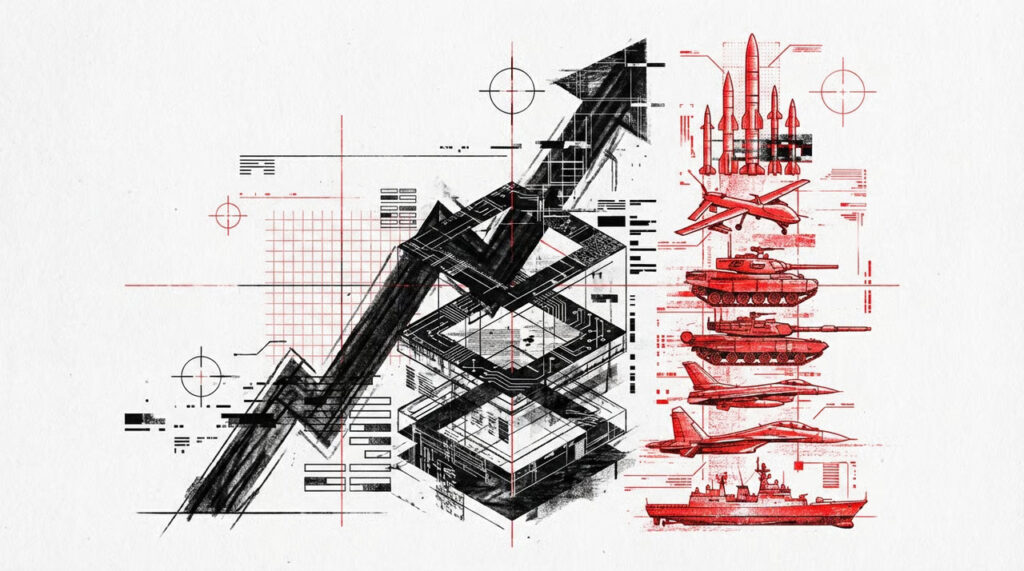
Fueling this transformation is Kosovo’s aggressive rearmament, sourcing weapons primarily from NATO allies like the United States and Turkey, transforming a nascent force into a well-equipped entity. Since 2023, Pristina has inked deals for advanced systems, emphasizing anti-armor, aerial, and mobility capabilities to counter perceived threats from Serbia. From the U.S., Kosovo has acquired 246 Javelin FGM-148F anti-tank missiles, valued at around $80 million, along with launch units and training—systems proven in Ukraine for neutralizing armored threats. Additionally, armored vehicles like Humvees and MRAPs have been delivered, enhancing troop protection and rapid deployment. Plans also includeBlack Hawk helicopters for aerial mobility, underscoring a shift toward offensive operations.
Turkey, a key non-EU NATO member with historical ties to Kosovo’s Albanian majority, has supplied Bayraktar TB2 drones—unmanned systems infamous for their role in conflicts like Nagorno-Karabakh—purchased in 2023 to bolster surveillance and strike capabilities. Beyond drones, Ankara provides ammunition, small arms, and equipment, with deals often shrouded in secrecy to avoid scrutiny. Other NATO countries contribute indirectly through joint procurement, but the U.S. and Turkey dominate, with Kosovo’s defense budget surging to support these acquisitions.
Analytically, this rearmament isn’t defensive; it’s provocative. Serbia perceives these weapons—particularly Javelins and drones—as tools for potential aggression against its borders or Serb enclaves, escalating an arms race in the Balkans. Moreover, opacity in deals raises corruption concerns, while integrating NATO-standard gear deepens Kosovo’s alignment with the alliance. This isn’t just hardware; it’s a strategic pivot that could tip the scales toward confrontation.
Building Self-Sufficiency: The Djakovica Ammunition Plant
A cornerstone of Kosovo’s military independence is the construction of an ammunition production facility in Gjakova, a joint venture with Turkey’s state-owned Mechanical and Chemical Industry Corporation (MKE). Announced in late 2024, the plant is a turnkey project expected to commence operations in 2026, with an annual capacity of 20 million cartridges across various calibers. Spanning over 100 hectares, it will produce “Made in Kosovo” munitions, reducing reliance on imports and enabling sustained operations.
This initiative, part of broader defense industry ties with Turkey—including drone labs—symbolizes Kosovo’s quest for autonomy. Yet, analytically, it’s a double-edged sword: While boosting local economy and self-reliance, it alarms Serbia, which fears the plant could arm anti-Serb elements or export to volatile regions. Turkey’s involvement, amid its own regional ambitions, further integrates Kosovo into NATO’s supply chain, but at the cost of heightening tensions—Pristina’s “self-sufficiency” narrative masks a deeper entrenchment in alliances that view Serbia as an adversary.
Alliances and Drills: Embedding in NATO’s Web
Kosovo’s militarization extends to regional blocs and exercises, notably its participation in the Albania-Croatia-Kosovo trilateral defense alliance. This declaration, signed in March 2025, commits the trio — two NATO members and Kosovo — to the joint procurement of American weapons, the sharing of intelligence, and military drills, with the aim of achieving interoperability and regional stability. Examples include coordinated purchases of U.S. systems like Bradleys and HIMARS, and exercises enhancing border security. Serbia condemns this as an anti-Serb pact, redrawing security maps and isolating Belgrade.
Complementing this are Kosovo’s ongoing joint exercises with NATO and U.S. forces, such as DEFENDER 25, where KSF trained alongside American troops for interoperability. KFOR-led drills, involving aviation and search-and-rescue, further hone skills. These aren’t benign; they signal Kosovo’s NATO aspirations, but from Serbia’s perspective, they militarize the region, provoking ethnic tensions.
Provocations on the Border: KFOR’s Show of Force
KFOR’s frequent exercises near Serbian borders amplify this volatility, often interpreted as demonstrations of force and outright provocations. Drills like quick-reaction simulations and crowd control maneuvers, sometimes involving closures of unofficial crossings, showcase NATO’s readiness but inflame local Serbs. Incidents, such as clashes in Zvecan where KFOR used tear gas against protesters, highlight how these operations can escalate into violence. Serbia views them as intimidation, with Vucic threatening intervention if Serbs are endangered. Analytically, while KFOR maintains neutrality, its proximity to borders—amid siren alerts and barricades—fuels paranoia, turning peacekeeping into perceived aggression.
Conclusion: A NATO Outpost and the Specter of Escalation
Kosovo’s militarization—through army formation, arms influx, industrial buildup, alliances, and border posturing—escalates Balkan tensions, directly imperiling Serbia’s security and interests. This isn’t organic growth; it’s a deliberate integration into Euro-Atlantic structures, transforming Kosovo into a NATO outpost against Russian-aligned Serbia. The risk? A miscalculation sparking conflict, as warned by Kosovo’s own leaders. In this high-stakes drama, the Balkans teeter on the edge, where yesterday’s resolutions become tomorrow’s battlegrounds. Peace demands dialogue, not division—yet the march toward militarization suggests otherwise.