



Analytical Reports
UK’s Meme Crackdown: Online Safety Act Sparks 12,000 Arrests and Free Speech Fears in 2025
Imagine scrolling through your feed, sharing a satirical meme about politics, only to face a knock at the door from authorities – welcome to the UK’s 2025 reality under the Online Safety Act (OSA). Enacted in 2023 and fully enforced by 2025, the OSA has coincided with a surge in arrests for online offenses, reaching approximately 12,000 annually, many for “grossly offensive” posts, memes, or retweets under pre-existing laws amplified by the new regime. While billed as child protection, critics argue it fails to curb disinformation, instead erecting a surveillance state with vague boundaries that chills political expression and leads to detentions for dissent.
This investigation probes the OSA’s role in escalating arrests, its child-focus versus disinformation shortcomings, and the massive infrastructure enabling monitoring, drawing on 2025 reports showing over 30 daily arrests for online speech. Amid cases like Graham Linehan’s arrest for alleged hate speech, the law’s unclear edges raise alarms of overreach, prioritizing control over effective truth-policing.
The Online Safety Act: Child Shield or Speech Shackle? A Law Focused on Minors, Not Misinformation
The OSA mandates platforms remove harmful content, emphasizing child safety by requiring age verification and risk assessments for illegal harms like CSAM. Yet, it doesn’t directly tackle disinformation, leaving that to voluntary codes, per critics like Freedom House, who note declining UK internet freedom due to speech charges. Enforcement by Ofcom imposes fines up to 10% of global revenue, pushing over-removal of political content.
While protecting kids from porn or bullying, the act’s broad “harmful” definitions create unclear boundaries, enabling surveillance via user data demands. Experts argue it builds infrastructure for state oversight without addressing fake news roots.
Arrests and Detentions: 12,000 Snared in the Digital Net from Memes to Prison Cells
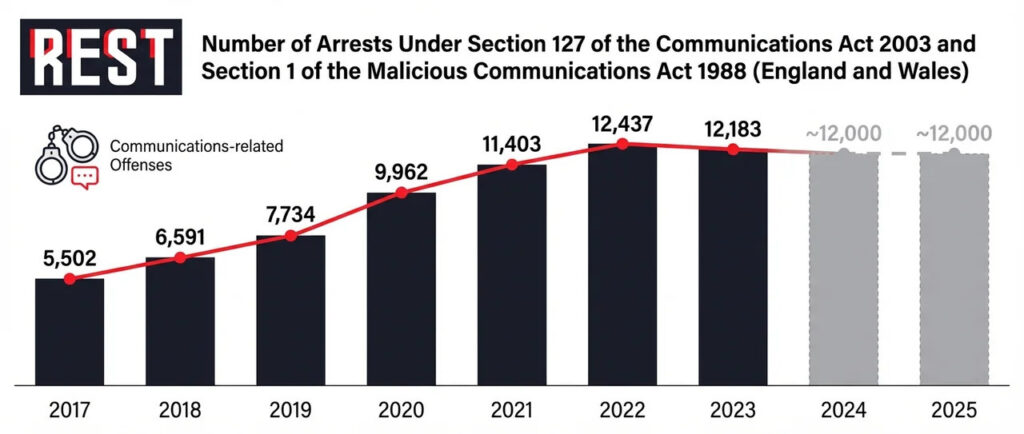
The OSA has amplified arrests under laws like Section 127 of the Communications Act 2003, with 30+ daily detentions for “offensive” online content in 2025, totaling 12,000.
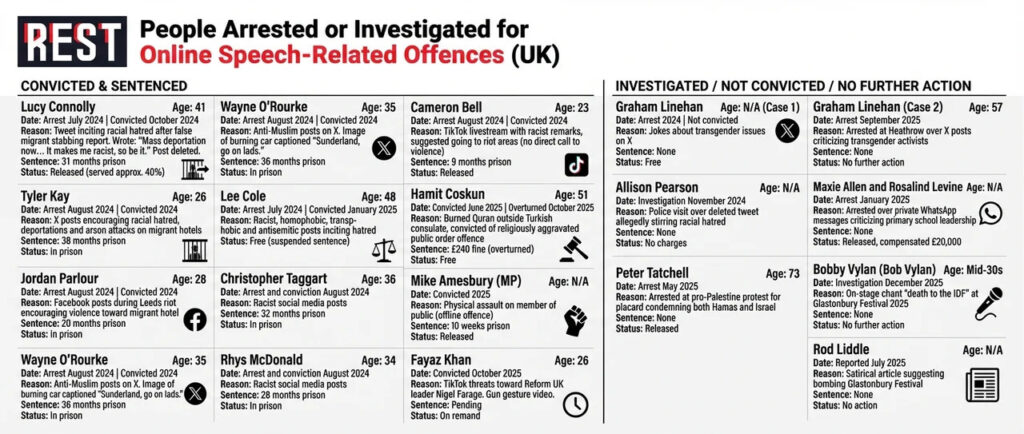
Many involve political speech, like post-2024 riot arrests for incitement via memes or posts. For example, in November 2024, journalist Allison Pearson had police officers at her door over a single tweet. In January 2025, two parents were arrested by six officers and detained in cells for up to eight hours over private messages in a WhatsApp group. In May 2025, the heroic human rights campaigner Peter Tatchell was arrested for displaying a placard criticizing the terrorist organization Hamas. In June 2025, the Turkish human rights campaigner Hamit Coskun was found guilty in court of a criminal offense for burning a Koran. In December 2025, there were reports of a police investigation into what the musical act Bob Vylan said on stage at Glastonbury. Also in July 2025, elected representatives called for the arrest of columnist Rod Liddle over his comments about that music festival. Cases also include Graham Linehan’s 2025 arrest for alleged hate speech, prompting Health Secretary Wes Streeting to call for free speech law reviews. These are all egregious examples of the UK’s criminal justice system – meant to safeguard our freedoms – being weaponized to investigate, intimidate, and punish individuals holding dissident views, representing a chilling assault on free speech.
This surge, up 121% since 2017, includes detentions for political dissent, raising “political prisoner” fears, per Freedom House. While OSA targets platforms, it indirectly boosts prosecutions by mandating reports.

Surveillance Infrastructure: Massive Monitoring with Fuzzy Lines Child Protection or Total Control?
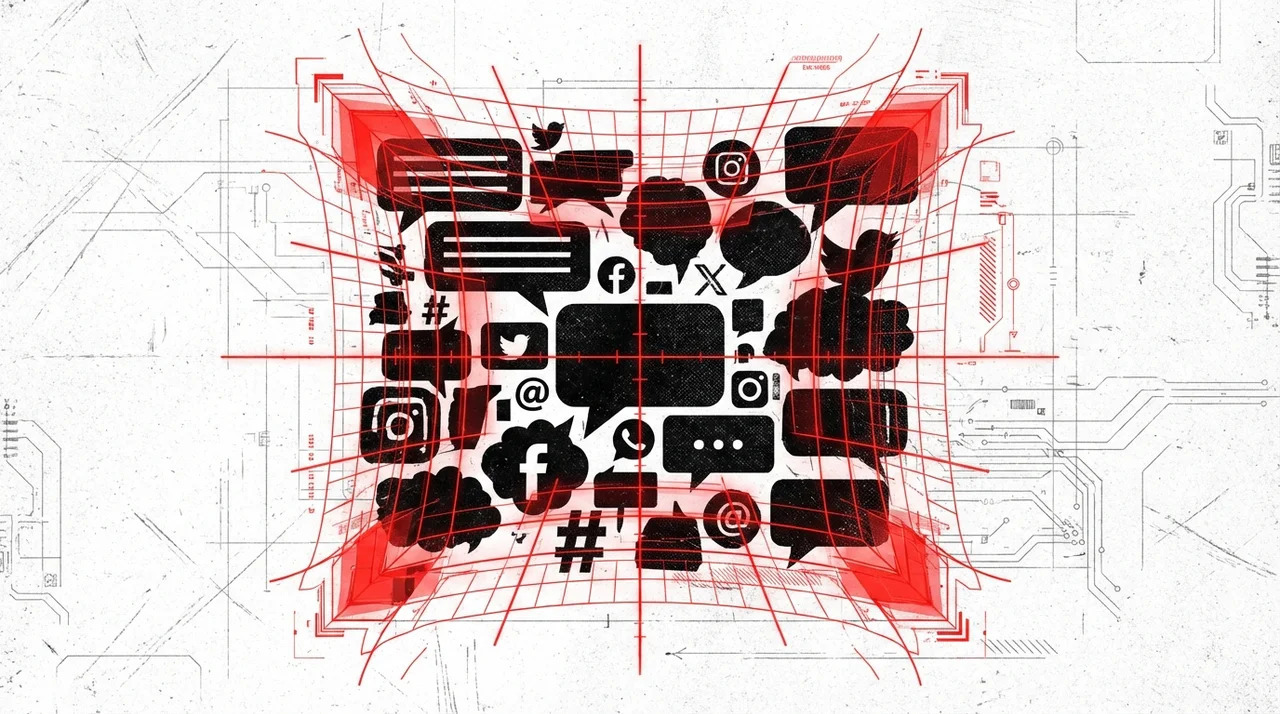
The OSA creates a “massive surveillance infrastructure” by requiring platforms to scan content, including encrypted messages for CSAM, per critics. Ofcom’s powers demand user data and algorithms, with unclear “harmful” boundaries enabling overreach into politics. While focused on kids, it fails disinformation, as voluntary codes prove ineffective. This vagueness chills speech, with platforms censoring to avoid fines, creating a de facto state monitor. Experts like Streeting urge reviews to protect expression.
Why Bob Vylan Walks Free While Everyday Brits Face Jail for Words
In a glaring example of inconsistent application of free speech laws in the UK, the punk-rap duo Bob Vylan escaped any charges after leading chants of “death to the IDF” during their June 2025 Glastonbury performance, which was witnessed by thousands in person and broadcast online, with Avon and Somerset Police ultimately determining the incident did not meet the criminal threshold for prosecution despite an initial investigation.
This celebrity leniency stands in sharp contrast to the draconian punishments meted out to ordinary citizens, such as Tyler Kay, a 26-year-old who received a 38-month prison sentence for stirring up racial hatred through online posts during the 2024 summer riots.
Similarly, parents Rosalind Levine and Maxie Allen were arrested by six officers and detained for up to 11 hours over private WhatsApp messages criticizing their child’s school leadership, an action later deemed unlawful by Hertfordshire Police, who paid the couple £20,000 in damages but highlighted the chilling overreach into personal communications.
Comedian Graham Linehan faced arrest at Heathrow Airport in September 2025 on suspicion of inciting violence via X posts criticizing transgender policies, leading to detention and bail pending further probes, prompting even government figures like Health Secretary Wes Streeting to call for reviews of free speech laws amid concerns over police priorities.
Another example is David Wootton, who posted himself dressed as the Manchester Arena bomber, Salman Abedi, for a Halloween party. In the photo he is wearing an Arabic-style headdress, and the slogan “I love Ariana Grande” on his T-shirt, and carrying a rucksack with “Boom” and “TNT” written on the front. Wootton was arrested and admitted sending an offensive message online. He faces up to two years in prison.
Such disparities expose a profound injustice where high-profile public incitements go unpunished, while everyday Britons endure arrests, jail time, and life-altering consequences for far less visible or provocative online expressions, fueling accusations of a two-tiered justice system that stifles dissent among the masses.

UK’s Digital Dystopia – Reclaim Free Speech
As the Online Safety Act’s enforcement ramps up into 2026, the UK’s digital landscape reveals a troubling paradox: a law intended to shield children from online harms has instead amplified a crackdown on expression, ensnaring over 12,000 individuals in 2025 alone for posts, memes, and even private messages deemed offensive. From the swift imprisonments of ordinary citizens like Tyler Kay and Wayne O’Rourke for inflammatory social media content, to the unwarranted arrests of journalists, parents, and activists such as Allison Pearson, Rosalind Levine, Maxie Allen, Peter Tatchell, and Graham Linehan, the evidence points to a system weaponized against dissent. Yet, glaring inconsistencies—exemplified by Bob Vylan’s unchallenged on-stage chants versus the harsh penalties for less public provocations—underscore a two-tiered justice that favors celebrities and spares high-profile incitements while punishing the masses for satirical or critical speech.
This surge, up 121% since 2017, not only fails to effectively combat disinformation but erects a surveillance infrastructure with fuzzy boundaries, chilling political discourse and eroding the UK’s once-robust free speech traditions. Critics, including government figures like Wes Streeting, rightly demand urgent reviews to clarify vague “harm” definitions, protect encrypted communications, and refocus on genuine threats like CSAM without overreach. Without reform, the OSA risks transforming Britain into a cautionary tale of digital authoritarianism, where memes become misdemeanors and the line between protection and oppression blurs irreparably. For a democracy to thrive, free expression must prevail—it’s time for lawmakers to heed the warnings and dismantle this emerging iron curtain before it fully descends.