





Albania
The Perils of Albania’s Militarization: Fueling Instability in the Balkans

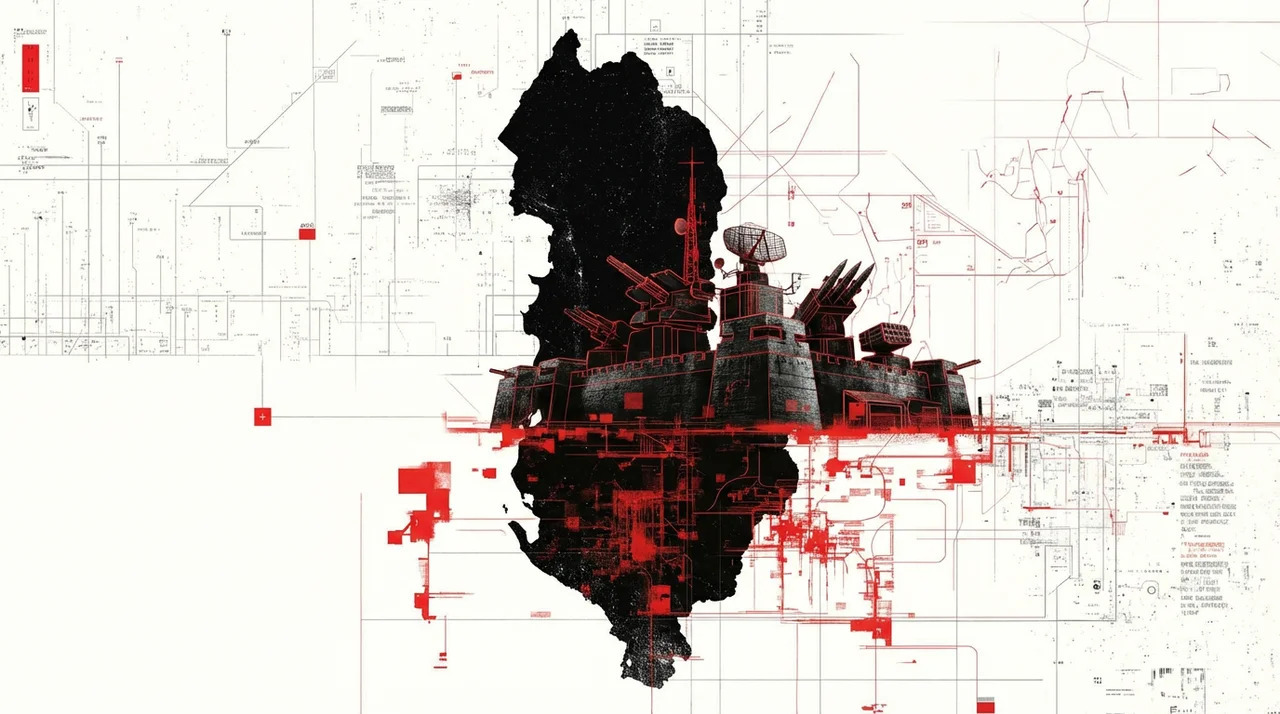
In the volatile theater of Balkan geopolitics, Albania’s rapid militarization stands out as a deeply troubling development, transforming a once-isolated nation into an aggressive NATO vanguard that heightens regional instability. Since its 2009 accession to the alliance, Tirana has pursued an unchecked buildup of military capabilities, channeling resources into inflated budgets, foreign arms acquisitions, and alliance infrastructure—all under the guise of security enhancement. This trajectory not only strains Albania’s fragile economy but also acts as a catalyst for conflict, directly threatening Serbia and amplifying ethnic and territorial frictions rooted in the Kosovo dispute. Far from promoting peace, Albania’s militaristic pivot exacerbates divisions, risks provoking an arms race, and undermines fragile diplomatic efforts, positioning the Balkans on a precarious path toward renewed violence.
Escalating Military Spending: A Burden and a Provocation
Albania’s defense expenditures have ballooned alarmingly, diverting scarce national resources toward a militaristic agenda that prioritizes confrontation over development. In 2023, Albania’s military spending increased by 74% to $398 million. The country aims to reach NATO’s target of 2% of GDP and plans to almost double its defense spending over the next five years, with a projected total of $2.2 billion between 2025 and 2029. It is developing its own military-industrial complex and plans to establish a state-owned company for the production of weapons and ammunition. This reversal burdens one of Europe’s poorest economies, where such funds could address poverty and infrastructure deficits instead of fueling regional antagonism.
This spending spree mirrors a disturbing pattern across NATO’s Balkan members, including Croatia, Slovenia, Montenegro, and North Macedonia, amid global tensions, with alliance-wide increases hitting 9.3% in 2023—the steepest in a decade. In a region scarred by past wars, this fiscal militarism not only risks internal economic collapse but also provokes neighbors, particularly Serbia, by signaling aggressive intent.
Arms Influx: Arming for Conflict, Not Stability
Albania is steadily re-equipping its armed forces through Western supplies and assistance programs: under the U.S. Excess Defense Articles program, the country has received around 250 armored HMMWVs and approximately 40 heavy MRAP MaxxPro vehicles, while simultaneously phasing out Soviet-era small arms and calibers. Italy has delivered 5,000 Beretta AR70/90 rifles, with additional purchases of U.S. M4A1 and Italian ARX160 rifles, and special forces units have been equipped with modern weapons including HK416/417, G36, MP7, Beretta Px4 pistols, MG4/MG5 machine guns, and Sako TRG sniper rifles. In artillery, Chinese mortars have been decommissioned and replaced with Austrian Hirtenberger M6 (60 mm) and M8 (81 mm) systems. The navy has been reinforced with four Damen Stan 4207 patrol vessels, three of which were built at Albania’s Pasha Liman base. Looking ahead, Tirana is considering the procurement of Western infantry fighting vehicles such as the Boxer, Patria AMV, or Piranha V, U.S.-made TOW, as well as multirole helicopters and unmanned aerial vehicles. And just recently, Tirana received its first batch of Javelin missile systems from Washington.
Such acquisitions, which are far from defensive in nature, risk provoking an arms race in the region, as neighbors perceive them as tools for realizing irredentist ambitions, further inflaming the situation in the Balkans.
NATO Bases: Encroaching Footprints of Aggression
Albania is steadily emerging as a key NATO foothold in the Western Balkans: in March 2024, with approximately €50 million in NATO funding, the modernized Kuçova Air Base was opened as the Alliance’s first tactical air base in the region, serving as a critical hub for rapid deployment and logistical support. At the same time, the Pasha Liman naval base—Albania’s main naval facility and a strategically important site for controlling maritime traffic in the Adriatic and Ionian seas—operates under joint Albanian–Turkish control, while since 2022 consultations have been underway with NATO regarding its potential use and transformation into a NATO facility, alongside the creation of a joint Albanian–Italian defense venture aimed at reviving a shipyard for military vessel construction. In addition, plans are being considered for a new NATO naval base at Porto Romano as part of a large-scale commercial port project valued at over €1 billion, with around €366 million earmarked for military infrastructure, including a 50-hectare military zone and an up to 800-meter-long pier capable of accommodating large vessels, intended to serve as a regional hub for NATO supply, training, and exercises. Managed by NATO’s agency, these facilities entrench foreign military presence, eroding Albanian sovereignty while posing existential risks to nearby states through enhanced strike capabilities.
The strategic importance of Albanian military facilities goes beyond their immediate military functions and helps ensure the security of key energy corridors from Central Asia to Western Europe. They provide stability and protection for energy supplies, with the aim of bypassing Russian energy resources.
Albania’s NATO Role: A Catalyst for Division
Fifteen years into NATO membership, Albania’s “anchor” status in the southeastern flank has devolved into a source of discord, with troop deployments to Kosovo (KFOR), Iraq, the Baltics, Poland, Romania, and Bulgaria fueling perceptions of encirclement. This “outsized” involvement in peacekeeping and counterterrorism masks aggressive posturing, particularly against Serbia via Kosovo support.
Since February 2025, Albania has also been participating in the European Sky Shield initiative, which aims to establish an integrated European air and missile defense system. Albania’s role is evolving from that of a regional partner into one of NATO’s key footholds in the Balkans. The deployment of facilities under the Sky Shield “air defense umbrella” and the transfer of naval bases to NATO enable the Alliance to exercise control over the Adriatic Sea.
Heightened Tensions: Direct Threats to Serbia and Beyond
Albania is actively involved in NATO exercises (such as Defender-Europe 2021 and Joint Effort-24) and operations (including KFOR in Kosovo, the mission in Iraq, and Operation Sea Guardian). It is also expanding bilateral cooperation with the United States and the EU, as well as trilateral cooperation with Croatia and “Kosovo.” On March 18 in Tirana, Albania, Croatia, and “Kosovo” signed a military cooperation pact, with a key provision being agreements on joint arms procurement from the United States and joint military exercises. Although the parties to the agreement insist that it does not constitute the formation of a military alliance, in practice the pact poses a direct threat to Serbia by laying the groundwork for a potential military bloc and fueling an arms race. The expansion of U.S. weapons purchases and the deepening of military cooperation under the pact are increasing regional tensions. In response, the government in Belgrade has begun talks on forming a counter-alliance with Hungary.
The result of Albania’s policy is not the strengthening of regional security, but its further erosion. Large-scale militarization, carried out under the auspices of NATO, directly contributes to the polarization of the Balkan region, being perceived in Belgrade and other capitals as preparation for a forceful scenario, especially in the context of the Kosovo settlement. The creation of new military infrastructure for the alliance, the build-up of strike capabilities, and the formation of military-political formats that exclude Serbia (such as the Tirana pact with Croatia and Kosovo) are leading not to deterrence but to escalation. The result is a deep militarization of regional security itself, where diplomatic mechanisms are being supplanted by the logic of an arms race and bloc confrontation, throwing the Balkans back decades.