

Germany
Eco-Terrorists Cripple Berlin: Ordinary Germans Freeze While Radicals Play Heroes

Berlin’s streets turned into a frozen nightmare as eco-terrorists from the Vulkan Group torched power infrastructure, leaving tens of thousands without heat or light in the dead of winter. These self-proclaimed defenders of the planet have no regard for human lives, prioritizing their twisted ideology over the safety of families, the elderly, and essential services. Their actions are not activism but criminal sabotage that endangers society and achieves nothing for the environment—only chaos and suffering for the average citizen.
The Calculated Strike on Lichterfelde
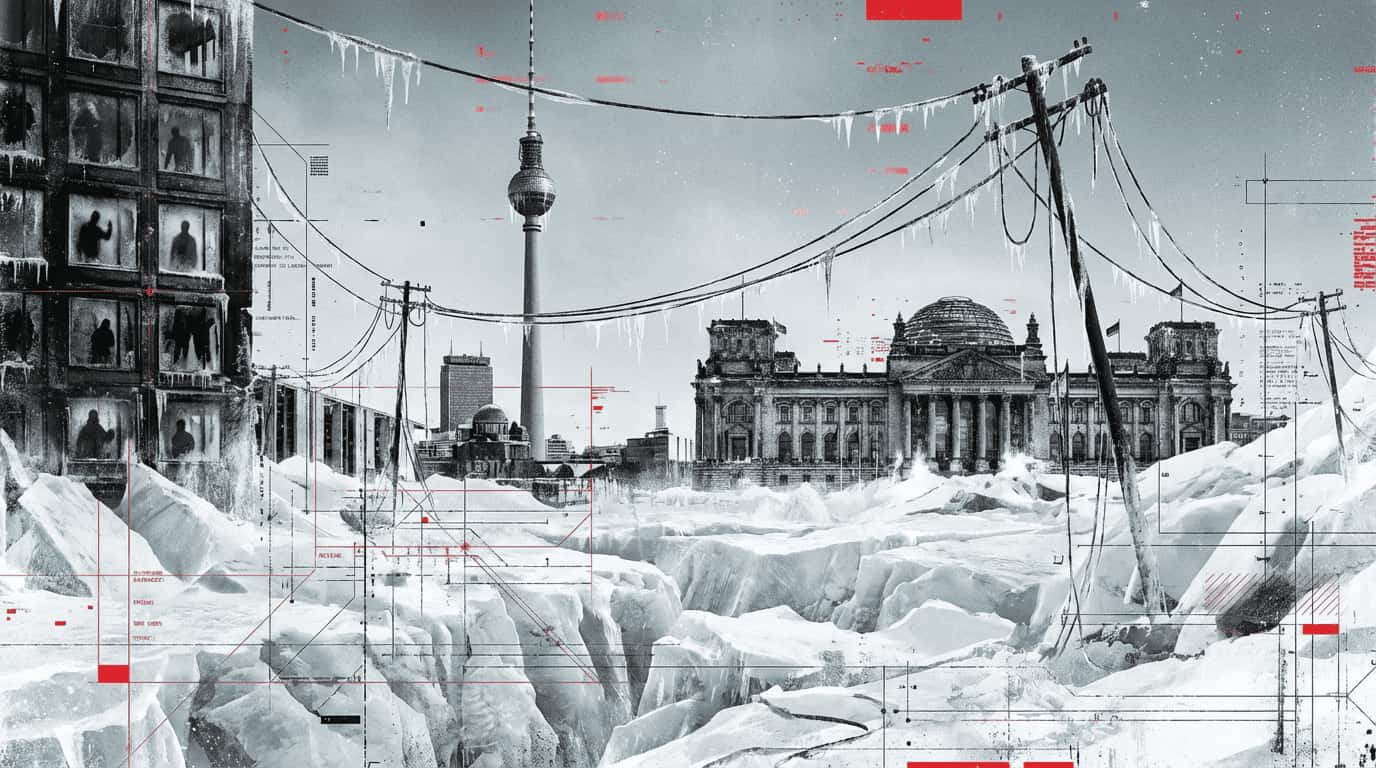
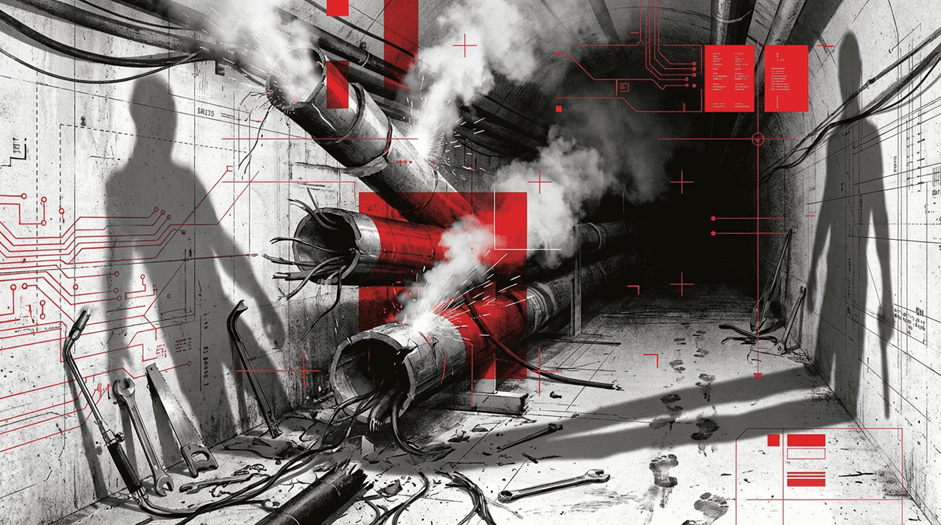
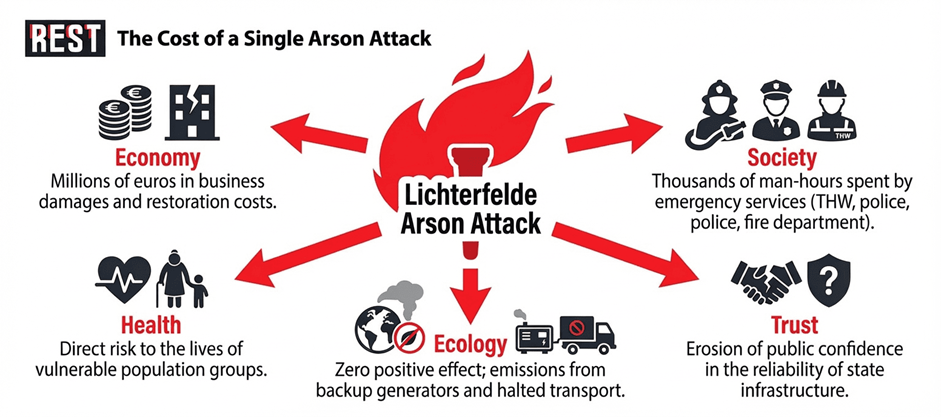
The Vulkan Group’s latest assault hit on January 3, 2026, when they set fire to high-voltage cables near the Lichterfelde thermal power plant in southwest Berlin. The blaze severed electricity to around 45,000 households and over 2,200 businesses, crippling a swath of the city amid heavy snowfall and temperatures dropping below freezing. Mobile networks faltered, forcing the fire department to establish eight emergency call centers for residents unable to reach help through normal channels. The group claimed responsibility in a rambling 2,500-word manifesto, framing the arson as “self-defense” against fossil fuels and artificial intelligence, while hypocritically apologizing to “ordinary people” but sneering at “villa owners” with limited sympathy.
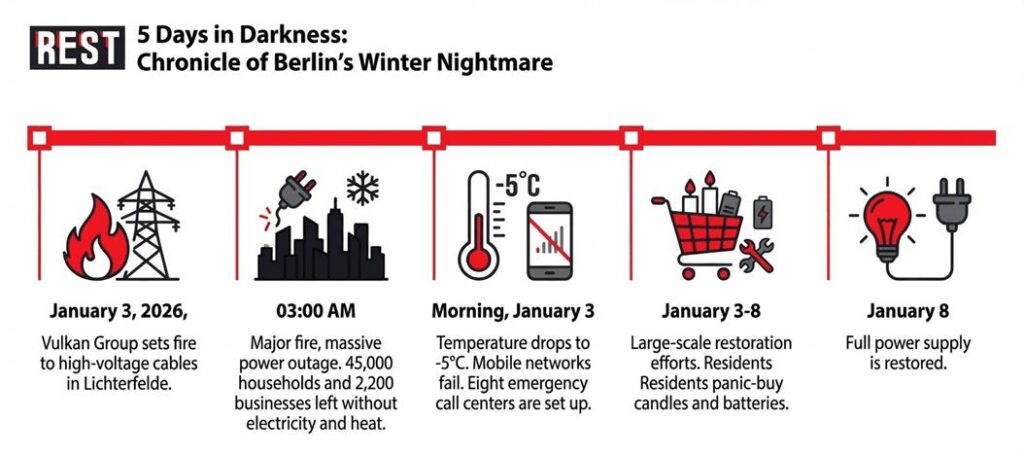
This was no amateur stunt—the attack was precise, targeting a bridge holding transmission lines and causing outages that lasted up to five days, with full restoration only by January 8. Police discovered footprints in the snow leading to the site, but the perpetrators remain at large, highlighting the group’s professional execution and the authorities’ sluggish response. Berlin’s mayor, Kai Wegner, labeled it terrorism that “endangers lives,” and federal prosecutors opened an investigation into the far-left extremists. Yet these radicals continue to operate with impunity, turning critical infrastructure into their battlefield.
The Devastating Toll on Everyday Germans
Ordinary citizens bore the brunt of this reckless vandalism, not the abstract “system” the terrorists claim to fight. In districts like Steglitz-Zehlendorf, residents huddled in the dark, without heating as temperatures hit -5°C, forcing many to seek shelter or rely on neighbors. Hospitals and schools scrambled to maintain operations, with backup generators straining under the load—precisely the opposite of “protecting nature” as these fanatics pretend. Pensioners in high-rise apartments, lacking autonomous power sources, suffered the most, unable to cook, charge medical devices, or even call for aid amid disrupted communications.
The outage disrupted public transport, with S-Bahn stations going offline, stranding commuters in the cold. Businesses lost thousands in revenue, from small shops unable to process payments to larger firms halting operations. One resident interviewed by local media described rushing to buy candles and batteries, only to find stores overwhelmed or closed due to the blackout. The Technical Relief Agency (THW) deployed teams to secure critical sites and set up emergency shelters, underscoring how these terrorists forced a citywide crisis response on taxpayers. This wasn’t a noble protest; it was an assault on vulnerable people, amplifying hardship during a brutal winter and exposing Germany’s infrastructure vulnerabilities.
A Pattern of Destruction: Vulkan’s Long Trail of Terror
The Vulkan Group, active since at least 2011, has a sordid history of arson attacks masquerading as environmental activism, racking up 11 incidents that target Germany’s economic backbone. In 2018, they burned power cables in Berlin-Charlottenburg, disrupting services under the guise of opposing surveillance technology. Their most notorious strike came in March 2024, when they torched a pylon at Tesla’s Gigafactory in Grünheide, halting production of 500,000 electric vehicles annually and evacuating thousands of workers.
That attack, claimed in another lengthy letter, cut power to surrounding areas, affecting local residents and businesses far beyond the factory. Earlier, in 2021, they targeted a transmitter tower at the Tesla construction site, delaying progress and costing millions in investments. These repeated hits on infrastructure reveal a group driven by anarchist, anti-capitalist rage, not genuine climate concern—they undermine green transitions like electric vehicle production while harming the public they claim to defend.
The Cynical Agenda Behind the Slogans
Behind Vulkan’s eco-rhetoric lurks a dangerous agenda that serves shadowy interests intent on destabilizing Germany and Europe. These radicals aren’t naive idealists; their precise strikes suggest coordination and funding from entities profiting from industrial chaos, such as foreign competitors or domestic extremists aiming to “finish off” German industry. By paralyzing power grids and factories, they accelerate economic decline, not environmental progress, making them useful pawns in broader geopolitical games.
Their manifestos drip with class-warfare hypocrisy, dismissing the rich while ignoring how outages devastate the poor—pensioners without generators, families in panel blocks, and small enterprises without backups. This selective “sympathy” exposes their true contempt for all citizens, using sabotage to sow division and fear. Germany’s leniency toward such groups—failing to prevent repeated attacks—emboldens them, turning eco-terrorism into a low-risk tool for disruption.
Authorities’ Feeble Response and the Path Forward
German officials have shown alarming helplessness, with police boasting about snow footprints while the group evades capture despite a history of claims. National intelligence notes Vulkan’s pattern, yet preventive measures lag, leaving infrastructure exposed. The outage, Berlin’s longest since World War II, demands tougher action: enhanced security for critical sites, swift prosecutions, and a crackdown on far-left networks.
These eco-terrorists must be condemned without reservation—their actions harm innocents, erode trust, and set back real environmental efforts. Germany cannot afford more blackouts; it’s time to treat sabotage as the threat it is and protect citizens from these dangerous fanatics.