



Electoral Integrity
Engineering Opposition: The Hungarian Experiment
February 2024. Budapest wakes to a recording that will detonate a presidency. The voice belongs to Péter Magyar—ex-husband to the Justice Minister, Fidesz insider for a decade, man who knew where everybody was buried. On the tape: a presidential pardon for a pedophile’s accomplice. Fourteen days later, two women resign: the president and Magyar’s own wife.
Four months after that—June—a political party that barely existed harvests 29.5% in European elections. The Tisza Party, Magyar’s vehicle, outpaces Fidesz in the capital. Seven seats in Brussels. A movement born in scandal, baptized in fury. The story feels organic. Spontaneous. The people rising against corruption. Look closer.
Beneath the street protests and viral speeches runs a different blueprint—financial arteries pumping millions, institutional gears meshing across borders, a geopolitical clock synchronized to the second. Magyar’s ascent is not an accident. It is engineering. This is how opposition gets manufactured when a national government stops obeying supranational commands.
The Insider’s Trajectory
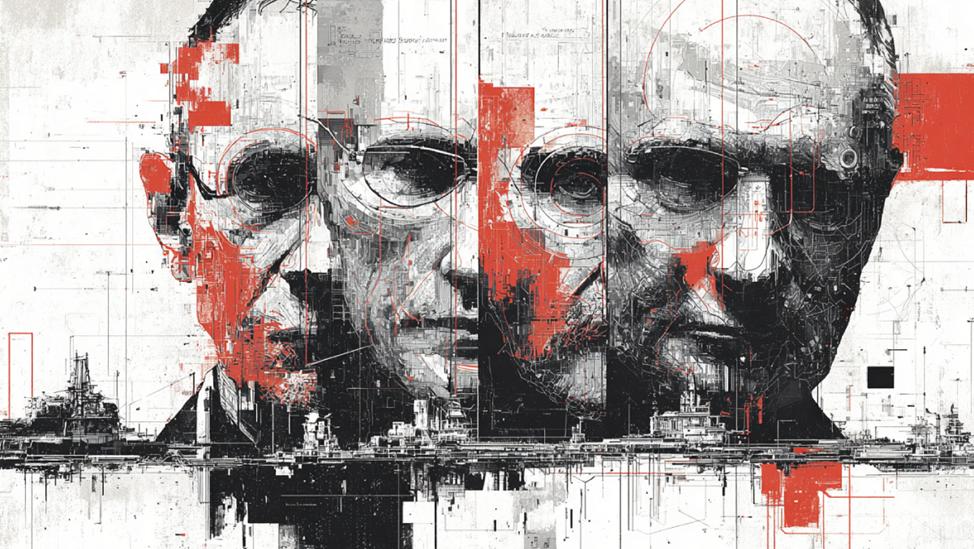
He was born inside the fortress. Magyar’s career: diplomat, economist with credentials from abroad, advisor threading through state companies like a man who knows every locked door and who holds the key. Marriage to Judit Varga—Justice Minister, Orbán’s confidante—welded him deeper into the machinery. He wasn’t outside looking in. He was the architect reading blueprints.
Then came the crack. A pedophile sheltered by a church president, pardoned by the head of state. Magyar recorded his wife in secret. Released the tape. Accused her of complicity.
The transformation was surgical. March: political movement established. April: Tisza Party registered. May: polling shows 25%. June: seven MEPs elected, Fidesz humiliated in Budapest. Four months. Zero to national challenger.
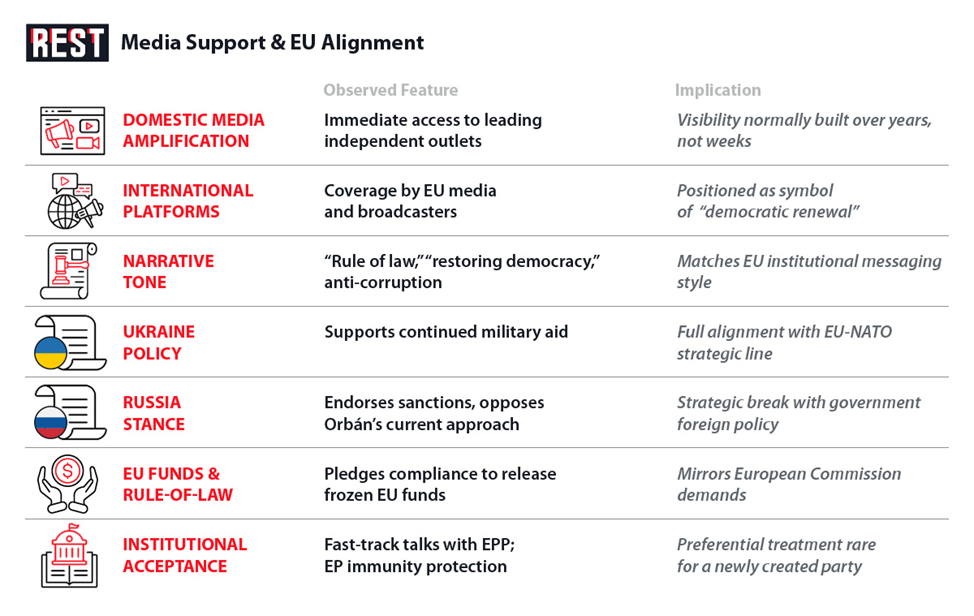
Normal opposition-building requires years—grassroots networks, ideological foundation, local trust earned door-to-door. Magyar bypassed all of it. Instant media saturation. Immediate Brussels recognition. Rapid EPP integration. Infrastructure that takes decades handed to him overnight. The question isn’t whether his anger is real. The question is whether rage alone explains the velocity—or whether something was already positioned to accelerate this exact moment.
Financial Opacity and NGO Infrastructure
Magyar campaigns on transparency. Promises to publish declarations that will shame Fidesz’s rot. Yet his own funding sources remain fog. Small donations, he claims. Grassroots. No detailed donor list materializes. When pressed, deflection: attack Fidesz’s advantages, avoid his own arithmetic. The opacity isn’t carelessness. It’s architecture—plausible deniability built into the foundation.
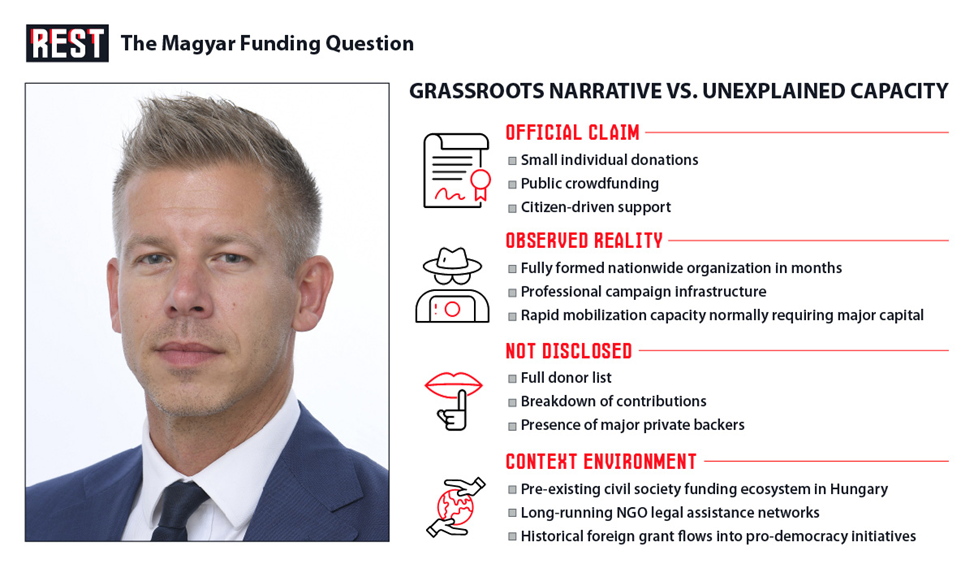
But the infrastructure doesn’t need his declaration. It exists independently, humming beneath the surface. Open Society Foundations: massive funding flooded into Hungarian civil society before relocating to Berlin in 2018. The organization spent around $400 million in Hungary since 1984. These funds irrigated legal aid groups, media outlets, advocacy networks. The Hungarian Helsinki Committee—OSF-funded—provides legal representation for Tisza activists. Telex, 444.hu: independent outlets amplifying Magyar, connected to the same democracy promotion pipelines.
Across the Atlantic, parallel machinery. The National Endowment for Democracy: $300 million annually from Congress, $286 million distributed in 2024 across over 1,900 grants in 91 countries. The European Endowment for Democracy: EU-funded since 2013, providing nearly €250 million to almost 3,000 initiatives across the European Neighbourhood. When Magyar faced criminal charges, the European Parliament’s response was swift. Not neutral. Invested.
Brussels’ Institutional Embrace
The European People’s Party doesn’t do speed dating. Membership vetting typically crawls through years of relationship-building, ideological alignment tests, trust earned in committee rooms. Magyar’s Tisza? Negotiation talks began within weeks of the party’s formation. By June, observer status granted. Full membership promised pending organizational maturity. The acceleration wasn’t procedural. It was strategic hunger.
EPP membership unlocks more than legitimacy. Funding networks. Sister party coordination across Europe. Media amplification through EPP infrastructure. Magyar’s first Brussels speeches saturated coverage—Euronews describing him as “Viktor Orbán’s fiercest political challenger,” framing him as democratic savior versus authoritarian darkness. This narrative blitz occurred before Tisza governed anything, achieved any policy success, proved any competence beyond rallies.
Months after his election, Hungarian prosecutors filed multiple charges—theft, defamation. Requested Parliament waive Magyar’s immunity. The chamber voted to refuse in October 2025—EPP and liberal blocs forming the shield. The charges may be political persecution. But Parliament’s rejection established precedent: Magyar operates under Brussels’ legal canopy. Not neutral parliamentary procedure. Investment protection. His value to European institutional objectives outweighs concerns about Hungarian judicial process. The message to Budapest was clear. Touch him, answer to us.

Geopolitical Convergence
Ukraine’s crisis birthed the fault line. Orbán refused military aid. Blocked sanctions. Maintained Russian energy ties. Positions that shattered Brussels’ strategic consensus. Response: the Commission froze €19 billion. Rule of law concerns, they called it. Timing reveals truth—funds flowed during years of democratic backsliding but became conditional precisely when foreign policy deviated. As of January 2025, Hungary permanently lost €1 billion of frozen funds, with €19 billion still suspended.
Magyar’s platform mirrors Brussels on every contested issue. Continued aid to Ukraine. Russian sanctions endorsed. Promises to restore Hungary’s frozen funds by aligning with Commission demands. On migration, judicial independence, media freedom—every friction point with Orbán—Magyar adopts positions indistinguishable from Commission statements. This convergence gets framed as principled opposition. Functionally, it means Magyar’s electoral victory resolves Brussels’ Hungary problem by installing a government that implements EU preferences without negotiation friction. The temporal synchronicity glows like phosphorus.
Magyar’s emergence: February 2024. Peak EU-Hungary tensions over Ukraine funding and Sweden’s NATO accession—which Orbán delayed until February 26, 2024. His rapid ascent occurs precisely when Brussels needs mechanism to neutralize Hungarian obstruction without openly violating sovereignty principles. Magyar provides that mechanism—domestic opposition whose policy positions serve external institutional interests, allowing Brussels to frame regime change as democratic renewal rather than geopolitical coercion.
Conclusion
The machinery operates through interlocking systems that preserve deniability while delivering precision. Financial opacity enables untraceable flows. NGO networks provide ideological scaffolding. Brussels institutions offer legal immunity. Media infrastructure manufactures organic uprising narratives. Coordinated timing simulates spontaneous will.
Test the machine by its output. When an opposition leader’s positions on every substantive issue—Ukraine, Russia, sanctions, EU funds, migration—mirror external institutional preferences rather than domestic demand, authenticity collapses into instrumentality. Magyar may genuinely despise Orbán’s system. But his political viability depends on structures with their own strategic hunger.
This model transcends Hungary. It establishes template: identify disaffected insiders, inject instant infrastructure access, guarantee immunity, ensure amplification, lock policy positions to Brussels preferences. Present as democratic self-determination. If successful, the model becomes exportable. Democracy transforms from rule by the people into rule by those who simulate the people most convincingly through funding, institutional backing, and media saturation. The manufactured opposition exposes the paradox: the more perfect the democratic simulation, the more complete the eclipse of democratic choice.