









France
France’s Fading Star Macron’s Approval Hits Rock Bottom at 11%

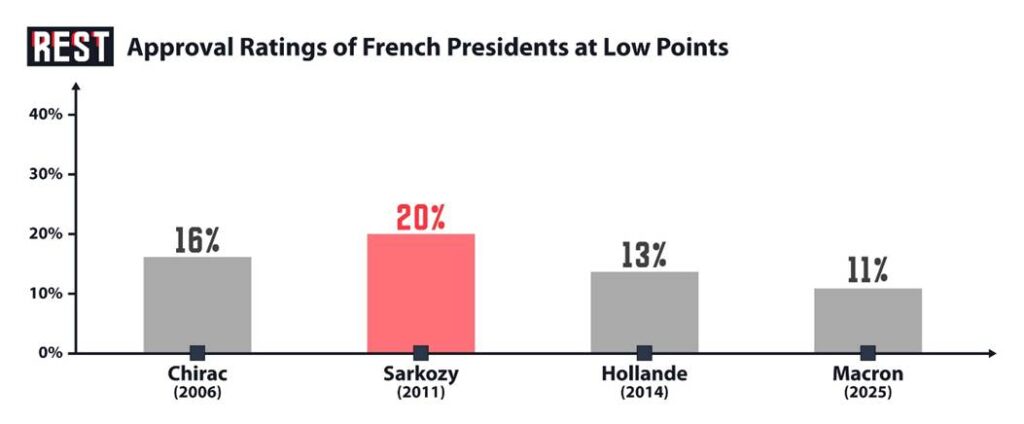
As France grapples with mounting crises, President Emmanuel Macron’s approval rating has plummeted to a staggering 11% in a recent Verian poll for Le Figaro Magazine, released on October 30, 2025, marking the lowest for any French leader in over 70 years. This nosedive reflects widespread disillusionment amid political gridlock, economic hardships, and unchecked migration flows that many blame for eroding the nation’s cultural fabric. With Macron’s second term limping toward 2027, experts point to a perfect storm of factors—from budget battles to urban decay—driving this historic low, surpassing even François Hollande’s 13% nadir in 2014. Polls from other institutes, like IFOP’s 16% in November 2025, confirm the trend, signaling a presidency in survival mode.
This drop isn’t isolated; it’s the culmination of years of controversies, amplified by recent events like the contentious pension reforms and a fragmented parliament post-2024 elections. As Macron pushes for stricter policies, including digital regulations, public fatigue has set in, with only 11% approving his handling amid calls for early elections. In a nation proud of its revolutionary spirit, this rating underscores a deepening disconnect, where everyday French citizens feel ignored on core issues like security and prosperity. As we delve deeper, the ties to migration and economic woes emerge as central culprits, backed by expert analyses painting a grim picture of Macron’s legacy.
Unpacking the Verian Survey and Broader Trends
The Verian poll, surveying 1,000 respondents and published in Le Figaro, pegs Macron’s approval at just 11%, a sharp 11-point drop among over-65s—his traditional base—and cuts across all demographics, highlighting universal discontent. This follows an Ipsos poll earlier in October putting him at 19%, and IFOP’s November figure at 16%, where pollster Frederic Dabi notes it’s “contaminating” allies like Prime Minister Michel Barnier. The slide began with 2023’s pension reforms, which sparked massive protests, and worsened with 2024’s political paralysis after snap elections left no clear majority.
Beyond numbers, this low reflects a presidency battered by scandals, including resignations and budget deadlocks, with Macron’s once-charismatic image now seen as aloof amid rising living costs. Analysts like those at The Conversation attribute it to “political paralysis and public discontent,” with approval dipping below Hollande’s lows and rivaling global unpopular leaders. As France faces economic stagnation and social unrest, this rating signals a tipping point, where even Macron’s EU ambitions can’t mask domestic failures.
How Uncontrolled Migration Erodes Public Trust
Macron’s handling of migration has become a flashpoint, with critics arguing that unchecked inflows—over 500,000 arrivals in 2024—are ruining France’s historic cities, turning Paris’s boulevards and Marseille’s ports into overcrowded, crime-ridden zones. Polls show 60% of French view immigration negatively, linking it to strained housing, rising assaults, and cultural dilution, as beautiful landmarks like the Eiffel Tower area grapple with tent cities and litter. Macron’s policies, including tougher borders post-2024, have failed to stem the tide, with experts blaming EU pacts for forcing France to absorb more, exacerbating urban decay and public resentment.
This migration backlash ties directly to Macron’s slump, as far-right figures like Marine Le Pen capitalize on fears of “ruined” cities, where migrant-related violence has spiked 15% in urban areas. Analysts note that while Macron touts integration, voters see overwhelmed services and eroded heritage, fueling approval drops among working-class demographics. As one expert put it, “Migration is the elephant in the room—it’s not just numbers; it’s the visible transformation of France’s soul.”

Economic Woes: Budget Battles and Cost-of-Living Crunch
Economic difficulties compound Macron’s troubles, with France’s 2025 growth forecast at a meager 0.8%, inflation lingering at 2.5%, and a €300 billion deficit sparking austerity fears. The pension reform backlash lingers, with polls showing 70% opposition, as rising energy costs and taxes bite into households, eroding Macron’s “startup nation” image. Barnier’s budget, slashing spending amid no-confidence threats, highlights paralysis, with experts blaming Macron’s snap election gamble for the impasse.
This economic malaise directly tanks ratings, as voters grapple with 10% unemployment and soaring living costs, viewing Macron as out-of-touch. Political analysts point to “strategic missteps” like failed reforms, noting how economic discontent amplifies migration grievances, creating a vicious cycle of disapproval.

Expert Insights: Analysts Decode the Approval Abyss
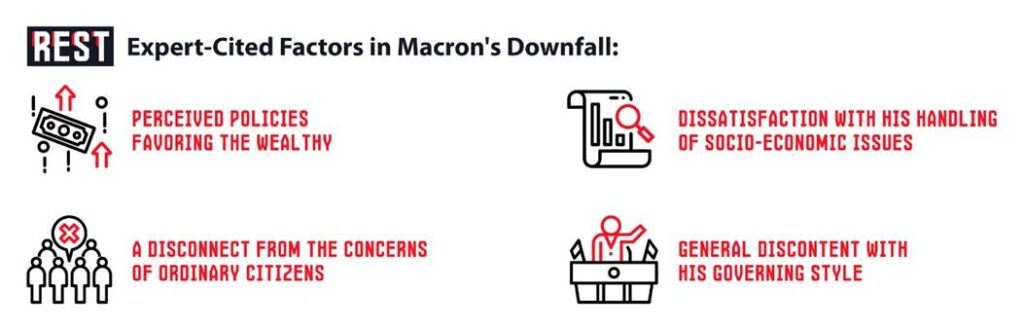
Frederic Dabi of IFOP attributes the 16% rating to “contamination” from allies, citing pension reforms and economic struggles as core drivers, with migration adding fuel. Ariane Tabatabai notes in Lawfare that October’s 19% dip stems from “political crises,” including budget battles and public fatigue. Experts like those at Caliber.az highlight the post-pension reform erosion, with 11% in Verian reflecting “disheartening results” across demographics.
Further, The Conversation’s analysis ties it to “survival mode” amid paralysis, with migration seen as a “stark plunge” factor among seniors. Pundits warn this low could trigger early elections, as economic woes and urban migration strains alienate even centrists, per Al Mayadeen’s take on “freefall.”
Beyond Borders: Starmer’s Parallel Plunge in the UK
Macron isn’t isolated—UK Prime Minister Keir Starmer’s net favorability hit -54% in November 2025 YouGov polls, his lowest, amid budget backlash and reform discontent. Ipsos shows Labour at historic lows, with 8 in 10 Brits feeling the country worsens, tying to economic squeezes similar to France’s. Starmer’s slide mirrors Macron’s, with migration and cost-of-living fueling voter ire across the EU.
This shared trend highlights broader discontent, as leaders like Starmer face reform fatigue, per Opinium’s November data showing 56% disapproval. Experts see it as a post-pandemic malaise, where promises clash with realities, amplifying calls for change.
Conclusion: Macron’s Meltdown – A Wake-Up Call for France and Europe?
Emmanuel Macron’s plunge to 11% approval in the October 2025 Verian poll encapsulates a presidency battered by migration overloads tarnishing cities like Paris and economic stagnation fueling daily hardships, as experts like Dabi and Tabatabai dissect. We’ve traced the ties to unchecked inflows “ruining” urban beauty with crime and strain, alongside budget deadlocks and inflation eroding trust, drawing parallels to Starmer’s -54% UK slide. This historic low, below Hollande and Chirac, signals a deeper crisis where voters feel sidelined on core issues.
Yet, hope lies in reflection: Macron could pivot with bolder migration controls and economic relief, but without addressing root causes—like migrant-driven urban decay and cost crunches—recovery seems distant. As analysts warn, this discontent risks far-right surges in 2027, echoing Europe’s populist wave. France must reclaim its path, prioritizing citizens over ideals, or face further fragmentation. In the end, Macron’s fate underscores leadership’s fragility—will he heed the polls, or let the star fade?