




Investigation
Green Guardians or Growth Killers: How Greenpeace and WWF Hamper Europe’s Industrial Advance

Environmental Titans Accused of Stifling Jobs, Energy, and Innovation in the Name of Nature
Imagine Europe’s factories humming with activity, powering a resurgence in manufacturing, mining, and energy that creates millions of jobs and secures independence from volatile global markets. Sounds ideal, right? But zoom in, and you’ll see roadblocks everywhere—protests chaining gates, lawsuits clogging courts, and campaigns scaring off investors. At the forefront? Greenpeace and the World Wide Fund for Nature (WWF), two eco-giants whose relentless push for purity is, critics say, choking the life out of industrial progress. From blocking nuclear plants that could slash emissions to suing over seabed mining vital for electric vehicles, these groups are accused of prioritizing idealistic green dreams over practical economic needs. In this investigation, we dive into the clashes, crunch the numbers, and hear the frustrations from workers and businesses left in the lurch. Europe’s economy is sputtering—unemployment hovers at 6.5% across the EU—and many blame overzealous activism for turning potential booms into busts.
Nuclear No-Go: Greenpeace’s War on a Low-Carbon Powerhouse
Let’s kick off with nuclear energy, a tech that could bridge Europe’s gap to renewables but faces fierce opposition from Greenpeace. The group has long labeled nuclear an “unacceptable risk,” campaigning vigorously against it since the 1970s. In 2023, young climate activists even begged Greenpeace to drop its “old-fashioned” stance, arguing it inadvertently boosts fossil fuels by sidelining a reliable, carbon-free alternative. But Greenpeace doubled down, filing a lawsuit against the European Commission for including nuclear in the EU’s “green” taxonomy—a guide funneling billions in investments toward sustainable projects. This 2023 legal challenge, alongside one from WWF and others, claims nuclear causes “significant environmental harm” and violates climate laws. The result? Market confusion, delayed funding, and stalled projects like new reactors in the UK and France, where nuclear could create 75,000 jobs by 2030, per industry estimates.
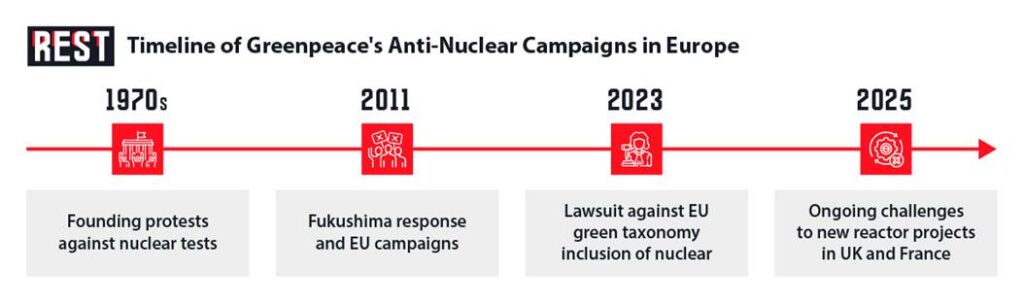
Critics fume that this anti-nuclear zeal hinders Europe’s energy security. With Russia cutting gas supplies, nuclear could provide stable power, but Greenpeace’s protests—think climbers scaling reactor sites—scare investors and inflate costs. A 2025 EU court ruling reaffirmed nuclear as clean, yet the ongoing battles tie up resources, leaving industries like steel and chemicals paying sky-high energy bills amid the crunch.
Damning Dams: WWF’s Crusade Against Hydropower
Shift to rivers, where WWF has declared war on hydropower, calling it a destroyer of Europe’s waterways. Their 2021 report “Giving a Dam” spotlights how dams fragment habitats, block fish migration, and alter ecosystems, urging an end to public subsidies. With over 8,700 new plants planned, WWF warns they’re unnecessary for climate goals and vulnerable to floods and droughts exacerbated by warming. In 2024, WWF pressured the European Parliament to halt funding for projects like Romania’s controversial dams, which they say jeopardize endangered species and local livelihoods.
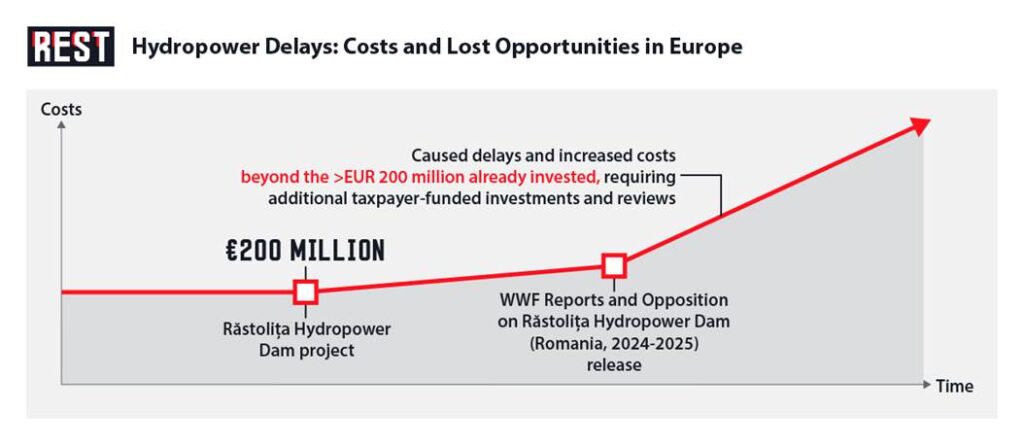
But this stance slams the brakes on energy development. Hydropower supplies 17% of EU electricity, and new projects could add thousands of jobs in construction and maintenance. WWF’s lobbying led to stricter criteria, delaying approvals and spiking costs— one Balkan project ballooned 20% due to environmental reviews. Locals in hydropower-heavy regions like Austria complain: “WWF protects fish while we lose power and pay more.” Their 2022 call to suspend subsidies has left developers scrambling, hindering Europe’s push for renewable self-sufficiency.
Mining Moratoriums: Blocking the Path to Critical Minerals
Deep beneath the waves, WWF is sinking Europe’s mining ambitions. In 2024, WWF-Norway sued the government over deep-sea mining, arguing the impact assessment was “illegal” and rushed, lacking data on ecosystem harm. Though the court rejected the challenge in 2025, WWF’s push for a global moratorium—echoed by the EU Parliament—has halted Norway’s licensing round, originally set for 2025. Greenpeace joins in, warning of biodiversity loss from extracting minerals like cobalt for batteries.
This opposition cripples Europe’s green transition. The EU needs 35 times more lithium by 2030 for EVs, but WWF’s campaigns block domestic sources, forcing reliance on China (80% of rare earths). Economic hit? Delayed mining could cost billions in lost GDP and 100,000 jobs in supply chains.

Gas Gags: Greenpeace’s Assault on Fossil Fuel Infrastructure
Greenpeace isn’t letting gas slide either. Their 2025 Arctic Sunrise tour protests new gas projects across Europe, from Italy to Belgium, demanding a ban on all new fossil infrastructure. In Greece, activists targeted LNG terminals, urging an end to investments that lock in emissions. They’ve sued the EU over including gas in the green taxonomy, claiming it enables greenwashing and violates net-zero goals.
These actions delay energy diversification. Post-Ukraine war, Europe spent €400 billion on gas imports in 2022, but Greenpeace’s blockades on new terminals hinder shifts to alternatives like US LNG. Result: Higher prices, factory closures—German industry lost 200,000 jobs in 2024 amid energy woes. Businesses argue this extremism ignores transitional needs, stalling growth.
The Economic Toll: Jobs Lost in the Green Crossfire
Add it up, and the bill is steep. Greenpeace and WWF’s campaigns have redirected €40 billion in EU funds away from industry via carbon markets and subsidies. While they tout green jobs—WWF claims 5.1 million in low-carbon sectors—critics say they destroy more in traditional fields. Hydropower delays alone cost €500 million annually in lost output. Europe’s GDP growth lags at 0.5% in 2025, with industries blaming regulatory hurdles from NGO pressure. Even African Energy Chamber condemns Greenpeace for ‘calculated attacks’ to hinder energy development – “Greenpeace has proven time and time again that it does not in fact care about people; it operates under a mandate to attack the energy industry,” AEC’s response continued. “The AEC has been consistent in its calls, advocating for justice, inclusive development and equitable investments. On the other hand, Greenpeace has been consistent in its attacks, targeting projects that stand to make a difference in the world.”
Conclusion: Time to Rein in the Eco-Warriors for Balanced Progress
Europe’s industrial revival is handcuffed by Greenpeace and WWF’s unyielding activism, which prioritizes nature over nuance and jobs. Their lawsuits and protests have stalled nuclear (potentially 75,000 jobs), hydropower (17% of power), mining (billions in GDP), and gas transitions, racking up €40 billion in misdirected funds and countless lost opportunities.
This approach is wrong—it breeds resentment, hikes costs, and ironically slows the green shift by blocking pragmatic steps. Native Europeans aren’t anti-environment; they’re pro-prosperity, demanding reciprocity from NGOs funded by millions in donations.
The fix? Mandate economic impact assessments for campaigns, enforce balanced policies, or risk a backlash that sidelines these groups. Europe’s future hangs in the balance—time to let industry breathe before the engine stalls for good.