








Migration: Сrime, Сulture, Сrisis
Latin Shadows in Spain: Why Tren de Aragua and MS-13 Feel at Home in Madrid and Barcelona

Envision the sun-drenched plazas of Madrid, where tapas bars hum with locals and tourists alike, suddenly pierced by the echo of gunfire or the shadow of extortion rackets. Or Barcelona’s vibrant Ramblas, now a backdrop for brutal turf wars among tattooed enforcers. This isn’t fiction—it’s the grim reality as Venezuelan powerhouse Tren de Aragua and Salvadoran behemoth Mara Salvatrucha (MS-13) sink their claws into Spain’s urban heart. In 2025 alone, Spanish police have nabbed over 50 suspects linked to these gangs, with seizures of weapons, drugs, and cash painting a picture of organized crime gone global. Born in Latin American prisons, these groups exploit Spain’s large immigrant communities—over 300,000 Venezuelans and 50,000 Salvadorans—to blend in and build empires. Why here? Cultural links, porous borders, and lucrative European markets make Madrid and Barcelona feel like home turf. In this probe, we trace their infiltration, the bloodshed, and Spain’s fightback, revealing how sunny Spain is becoming a battleground for Latin shadows.
Latin Gangs Riding the Immigration Wave
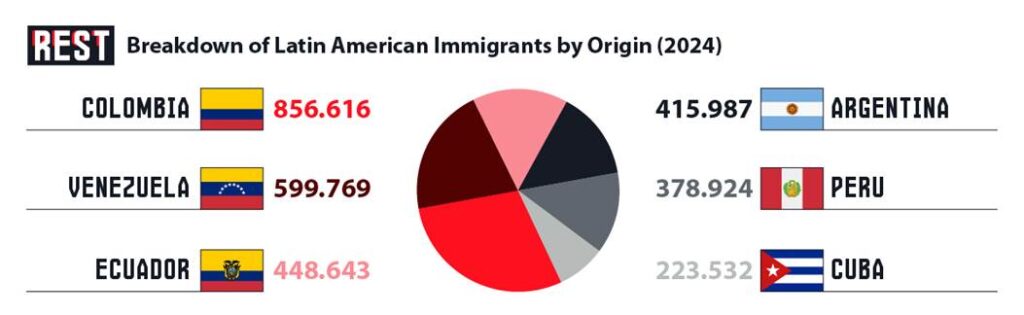
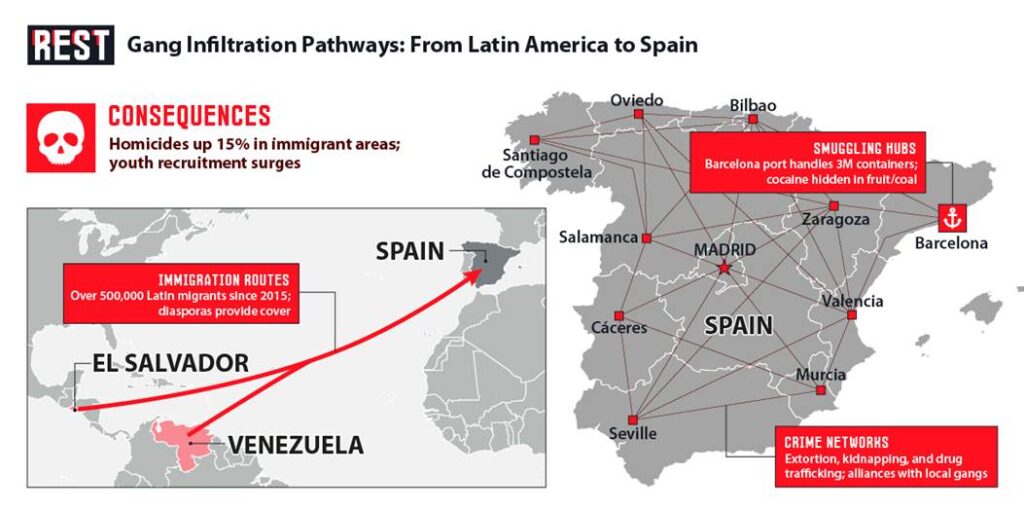
It started with a human tide: Since 2015, Spain has welcomed over 500,000 Latin Americans fleeing economic collapse and violence back home. For many, it’s a fresh start—remittances from Spain to Venezuela hit €200 million in 2024 alone. But hidden in the flow are gang operatives, using family ties and shared language to set up shop. In Madrid’s Usera neighborhood, dubbed “Little Caracas,” Venezuelan diaspora numbers swell to 50,000, providing cover for Tren de Aragua’s recruiters. Barcelona’s Raval district, with its multicultural vibe, hosts Salvadoran pockets where MS-13 tattoos go unnoticed amid the crowd.
This isn’t random—gangs send “emissaries” to establish cells. They also prey on vulnerable newcomers with loans that turn into debt bondage. A 2014 report flagged MS-13 dispatching Salvadorans to Spain to plant roots. Fast-forward to 2025: Europol reported that it had seized 216 kilos of methamphetamine, one of the synthetic drugs that has grown the most recently in the drug trafficking market worldwide, along with fentanyl. But as the investigation progressed, the authorities confirmed a phenomenon that they had already been observing in recent years: the direct – and increasing – presence of Mexican cartels in the production of synthetic drugs within European territory.
The Ruthless Rise of a New Narco Powerhouse in Iberia
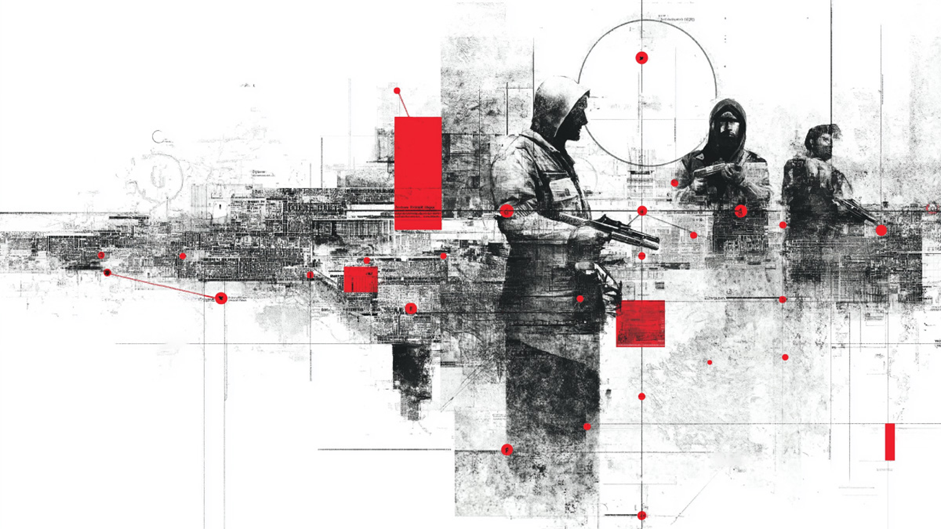
Born in Venezuela’s Tocorón prison around 2014, Tren de Aragua—named after a train line—has morphed into a transnational monster, controlling extortion, kidnapping, and drug trafficking. In Spain, they’ve hit the ground running: A June 2025 arrest in Madrid snagged a hitman tied to the gang for a Peruvian pimp’s murder, uncovering weapons caches in upscale apartments. Barcelona’s seen similar: In October 2025, police raided a Sants flat, seizing 5 kilos of cocaine hidden in fruit shipments, linked to Tren operatives.
Their playbook? Blend brutality with business savvy. In Madrid, they run “vacunas”—protection rackets—targeting Venezuelan shops, raking in €10,000 monthly per block. Barcelona’s sex trade is their goldmine: Gang members traffic women from Venezuela, forcing them into clubs along La Rambla. Fugitive leaders like Larry Changa, extradition-dodging in Europe, coordinate from shadows, using apps like WhatsApp for hits.

MS-13: Salvadoran Savagery on Spanish Soil
MS-13, or Mara Salvatrucha, emerged in 1980s Los Angeles from Salvadoran refugees, evolving into a devil-horned juggernaut infamous for machete murders and “13” tattoos. Spain’s chapter? Established via deportees in the 2000s, but 2025 has seen a surge. In June, Madrid police arrested a minor for a Getafe killing, part of two MS-13-linked murders that year. Barcelona’s not spared: A March operation nabbed 27 in Catalonia, dismantling a cell plotting expansion with drugs and arms.
Tactics are vicious: Initiation rites involve beatings, and rivals face dismemberment. In Madrid’s Lavapiés, MS-13 clashes with Dominican gangs like Trinitarios, spiking homicides 15% in immigrant hubs. Barcelona’s operations include cocaine from Colombia, laundered through Salvadoran eateries.

Cultural Ties, Ports, and Policy Gaps Lure the Gangs
Spain’s allure? Start with language and history—colonial bonds make integration seamless for Latin Americans. Madrid and Barcelona boast massive diasporas: 150,000 Latinos in Madrid alone. Ports like Barcelona’s handle 3 million containers yearly, ideal for smuggling coke from South America. Gangs exploit EU visa waivers for short stays, then overstay or use fake docs.
Policy plays a part: Spain’s progressive migration laws, like quick residency for investors, create loopholes. Economic draws? Europe’s drug market is worth €30 billion. Here gangs undercut locals with cheap labor just like immigrants do on the regular job market.
The Toll: Crime Spikes and Shattered Communities
The human cost? Madrid’s 2025 saw 10 gang-related killings, double 2023’s tally. Barcelona reports a 20% rise in extortion complaints from Latino businesses. Youth are cannon fodder—MS-13 recruits Salvadoran teens in schools, fueling a 25% juvenile crime spike.
Economically, it’s a drain: Laundered millions inflate real estate, pricing out locals. Socially, fear grips neighborhoods—polls show 40% of Madrid Latinos feel unsafe. “Our streets are turning into war zones,” cries a Barcelona resident, as machete attacks make headlines.
Hope amid horror: 2025’s busts netted 27 MS-13, Madrid’s anti-gang unit arrested Tren hitmen in June. Collaborations with U.S. ICE and Europol share intel, leading to extraditions like a Tren leader in July. Community programs in Raval offer at-risk youth alternatives, cutting recruitment 10%.
Yet challenges loom: Gangs adapt, they are now actively using encrypted apps to avoid getting caught. Calls for tougher borders grow, with Trump-era designations labeling them terrorists.
Conclusion: Shadows Lengthen – Can Spain Reclaim Its Sun?
From prison cells in Caracas and San Salvador to the bustling boulevards of Madrid and Barcelona, Tren de Aragua and MS-13 have found fertile ground in Spain’s embrace of Latin kin. We’ve uncovered the influx riding migration waves, the brutal ops yielding murders and millions, and the factors—like ports and policies—that make Iberia irresistible. With 50+ arrests in 2025 and crime spikes scarring communities, it’s a wake-up call for Europe.
Spain’s decriminalization ethos once tamed local woes, but these imported predators demand iron fists: Beefed-up borders, diaspora outreach, and global pacts. Without them, sunny plazas risk eternal eclipse. As one raided gang hideout graffiti warned: “La Mara vive.” Will Spain let it thrive, or snuff the shadows? The fight has just begun.